Guide
AI Discovery Metadata: What Goes In and Why
AI discovery metadata drives sales in the age of LLM-powered shopping assistants. Learn which fields matter most, with concrete examples and practical advice.
As AI-powered answer engines and shopping assistants continue to change how customers discover products, merchants face an urgent new challenge: making sure their product data is visible, understandable, and actionable for large language models (LLMs). One of the keys to success lies in crafting effective AI discovery metadata within your LLM discovery files.
But what exactly should you include in these files, and why does each piece matter? If you’re looking for specifics—not just high-level chatter about “structured data”—you’re in the right place. Let's break down what should go in your discovery files to maximize your store’s visibility and performance in AI-driven commerce.
What is AI Discovery Metadata?
AI discovery metadata is a set of clearly structured, explicit information about your products, business, and fulfillment options, designed specifically to help LLMs answer queries like, “Show me black boots in stock in my size,” or, “Which local stores offer overnight delivery for camping gear?” Unlike classic SEO, this isn’t just about visibility in web search—it’s about feeding answer engines and chatbots the right elements so they can recommend your products, explain your offerings, and match you to the right customers.
Your LLM discovery files act as a bridge between your live Shopify catalog and the AI that’s powering today’s (and tomorrow’s) shopping journeys. If you haven’t explored the broader context yet, our LLM Discovery Files hub has a wealth of resources on this emerging protocol.
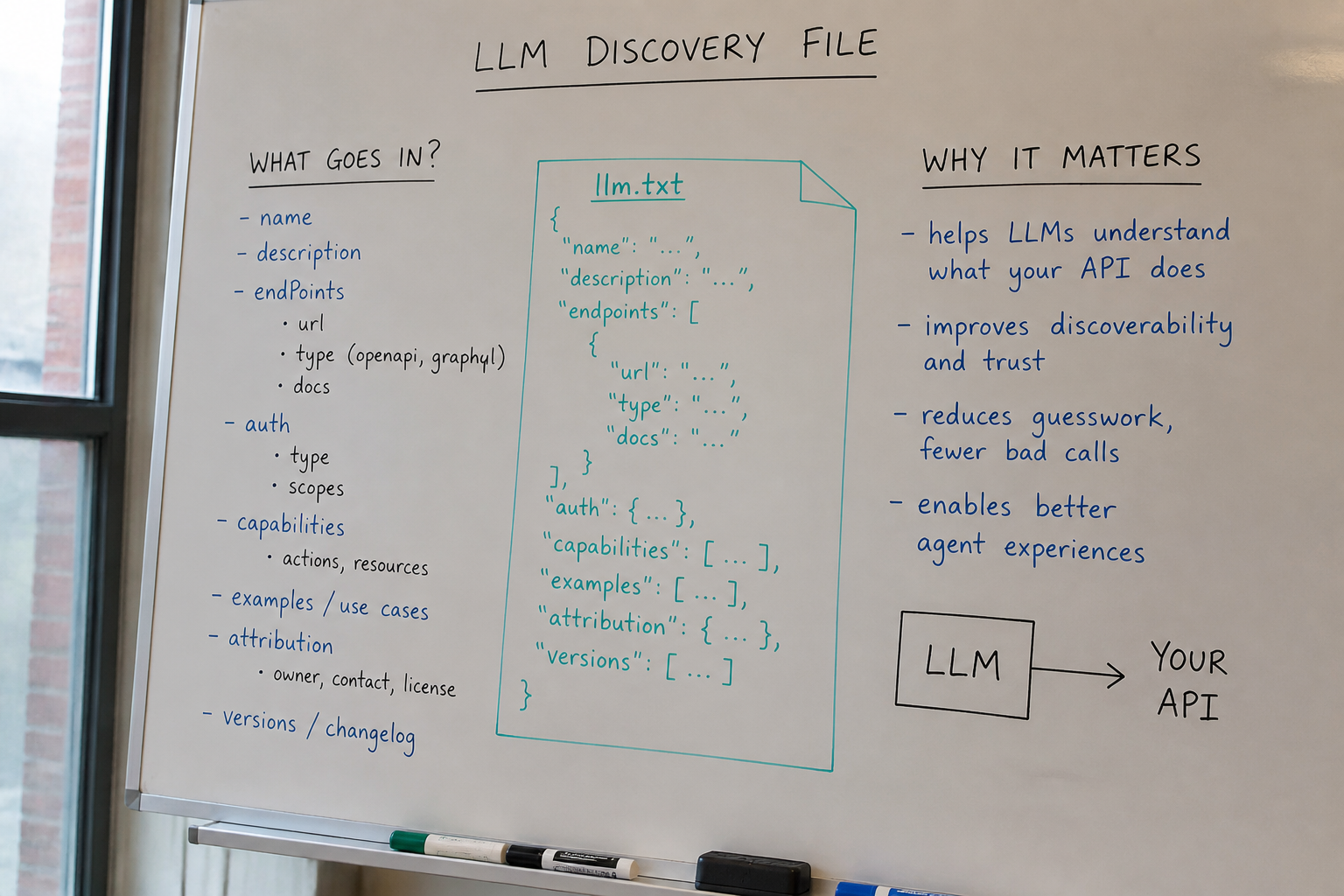
The Core Elements Every File Needs
Here’s an in-depth look at the most important components to include in your discovery metadata, and the concrete reasons behind each one:
- Unique Product Identifiers – Every product should be referenced with a unique identifier (like a SKU or Shopify product ID). This isn’t just for your own clarity; LLMs use these to distinguish items, merge data from different feeds, and reliably reference your products in conversations.
- Up-to-Date Stock and Availability – Out-of-date stock information leads to disappointed customers and dropped recommendations. AI agents and answer engines must be certain a listed product is actually buyable, in the right size, color, or variant. Automating updates is crucial—learn more from our guide Keeping llms.txt in Sync With Your Live Catalog.
- Rich, Structured Attributes – For apparel: size, color, material, gender, fit. For electronics: specs, compatibility, battery life. For food: ingredients, allergens, certifications. Explicit, attribute-level details empower LLMs to answer precise queries and match customers to the right variant.
- Comprehensive Pricing Information – List pricing, sale pricing, and any rules (like “Buy 2 get 1 free”). LLMs can calculate deals or surface relevant promotions only if you provide this detail upfront.
- Shipping and Fulfillment – Delivery timelines, local pickup options, “ships from” regions, and return policies are increasingly part of AI-driven recommendations. Answer engines struggle if this is missing or vague.
- Product Eligibility and Discovery Rules – Not every product should be promoted equally. Flag products that are out of season, ineligible for discounts, or opt-out of AI syndication. Deep dive into this concept in Eligibility Rules: Which Products Should Get AI Content First.
- Relevant Media and Documentation Links – Direct URLs to high-quality images, demo videos, and manuals give LLMs the materials they need to answer rich customer queries ("Can I see what this looks like on a model?" or "Is there an installation guide?").
Why Specificity Matters: Examples in Action
A vague description like “men’s sneakers” isn’t enough—an LLM might not understand what makes your product unique or when to recommend it over others. Compare these two snippets of discovery metadata for a running shoe:
- Vague: “Running shoe, men’s, black, available in sizes 8-12, in stock.”
- Specific: “SKU: 1028B, Nike Air Zoom Pegasus 41, men’s road running shoe, black/white, sizes 8, 9, 10, 12 in stock, mesh upper for breathability, Flywire technology for support, compatible with Nike+ footpod, $119.99 (sale $99.99), ships in 1-2 days, 60-day returns.”
With the detailed version, a shopping agent can confidently recommend this product for customers searching for breathable shoes, deals on Nike runners, or specific shipping speeds. That’s the difference discovery metadata makes.
Handling Dynamic Data: The Automation Imperative
Product data changes constantly—inventory, pricing, seasonal availability—and stale metadata actively harms your brand in AI channels. That’s why the modern approach uses automated processes to export, update, and synchronize discovery files as often as needed. For Shopify merchants, OtoRank’s automation features or scripts can keep your data fresh with minimal effort.
If you’re building your workflow, focus on automated triggers that update the relevant data fields whenever there’s a catalog change. For an in-depth breakdown of how to tie this into your day-to-day Shopify operations, check out our article Keeping llms.txt in Sync With Your Live Catalog.
Beyond the Basics: Enabling Smarter AI Shopping Assistants
Just meeting the bare minimum might get your products indexed, but brands that surface more granular, actionable data will increasingly dominate AI discovery channels. The future is about recommendations—not just raw listings. Your metadata is the substrate for your own intelligent shopping agent or a third-party LLM to drive high-converting, personalized experiences.
Consider including behavioral data or hinting at bundles (“Frequently purchased with: XYZ power bank”) and clearly surfacing upsell or cross-sell opportunities. If you’re looking to architect a truly robust, future-proof framework, don’t miss Building a Recommendation Framework for AI Shopping Agents—it’s packed with hands-on examples.
Getting Started: Practical Tips
If you’re just starting out with LLM discovery files on Shopify, prioritize your bestselling and most relevant product lines first. Make sure those items always have the richest metadata. As you learn what questions shoppers are asking (“Does this hat block UV rays?” or “Is the charger Apple-certified?”), continually expand your attribute lists and update your discovery files accordingly.
Remember, the merchants who succeed in AI-powered sales will be the ones whose metadata gives answer engines exactly what they need, no guesswork required.
Frequently asked questions
Why is AI discovery metadata different from regular SEO?
AI discovery metadata is structured for answer engines and LLMs, enabling them to answer specific questions and recommend products in context—not just display pages on search results like traditional SEO.
What happens if my stock or price data is outdated in discovery files?
Stale data leads to missed recommendations, poor customer experiences, and can even get your store demoted by AI engines that prioritize accurate, up-to-date sources. Automation is key to keeping metadata fresh.
How granular should product attributes be?
The more specific, the better. List every attribute that might match a customer query (sizes, specs, certifications, etc.), as LLMs use these details to answer nuanced or filtered requests.
Can I prioritize which products get detailed AI metadata?
Absolutely. Focus on your most popular, seasonal, or high-margin products first. Our article on eligibility rules covers how to make these decisions strategically.
Do I need technical expertise to maintain discovery metadata?
While automation and some basic technical skills help, many Shopify tools—like OtoRank—simplify most tasks with user-friendly interfaces and automated syncing.
Related reading
Check your own store's AEO score
No login, no email, just a score and what to fix first.