Guide
Credit Packs vs. Monthly Plans: What's More Cost-Effective?
Struggling to choose between OtoRank credit packs and monthly plans? We break down real-world costs, use-cases, and how to maximize your ROI on Shopify.
Understanding OtoRank's Billing Options: Credits and Monthly Plans
If you’re optimizing your Shopify store for AI answer engines, cost-effectiveness is essential. OtoRank offers two main billing models: pay-as-you-go credit packs and recurring monthly plans. At a glance, both seem viable for growing ecommerce businesses—but which delivers the best value for your money? Let’s dive deep into the numbers, use-cases, and real-world scenarios so you can pick the right fit for your store and avoid common overspending traps.
Before we get granular, it’s helpful to ground yourself in the broader landscape. For a complete overview of OtoRank’s billing structure, visit the Credits, Billing & ROI hub. Here, we’ll zero in on the practical financial impacts for merchants like you.
What Are Credit Packs and Monthly Plans?
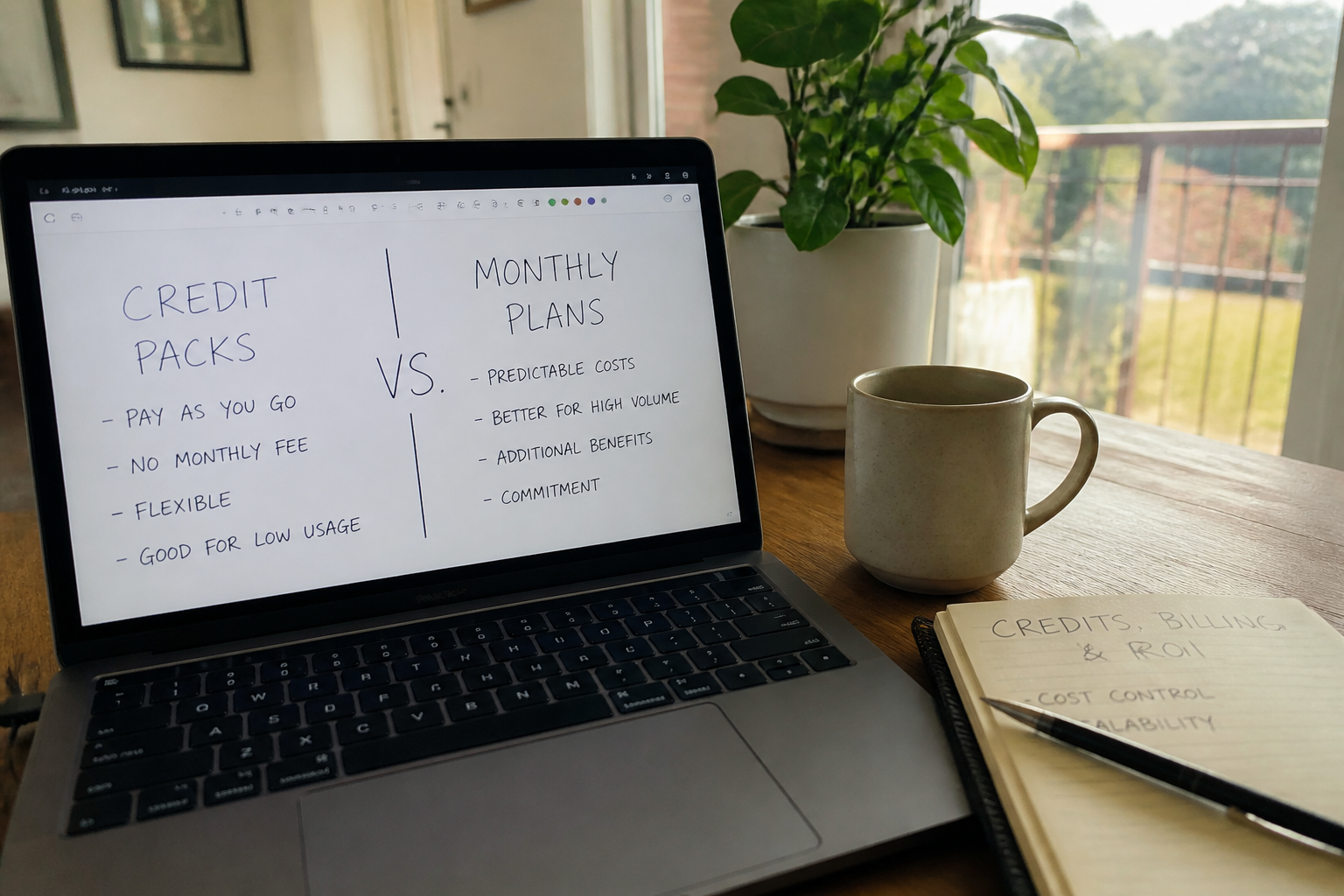
OtoRank’s credit packs are one-time purchases. Think of these as buying a set number of AI actions—content generations, product optimizations, or data exports—up front. Once you’ve used up those credits, you can top up as needed, no strings attached.
Monthly plans, on the other hand, offer a bundled allocation of credits refreshed each billing period. They typically come in tiered options (like Growth, Pro, or Enterprise), each unlocking a predefined quota and often extra features or priority support. For more on how plan tiers align with store scale, check out Free vs. Growth vs. Pro vs. Enterprise: Which AEO Plan Fits Your Catalog Size?.
Real Pricing, Real Math: Comparing the Costs
Let’s say you need 5,000 AI actions this month. Here’s an illustrative pricing breakdown:
- Credit packs: Buy just what you need—5,000 credits at $0.012/credit = $60.
- Monthly plan (Pro): 6,000 credits included at $55/month.
- Overage charges: Monthly plans often give a lower per-credit price for excess, e.g., $0.010/credit above quota.
Upfront, the Pro plan looks slightly better ($55 vs. $60 for 5,000 credits), and you even get more credits (6,000 vs. 5,000). But the bigger your requirement, and the more predictable your usage, the more a monthly plan can save you on per-unit costs. Notably, if you sometimes use less, unused monthly plan credits typically do not roll over—while credit packs remain yours until depleted.
When Are Credit Packs the Smarter Choice?
Credit packs shine when your usage is unpredictable or project-based. If you’re only running one major batch of catalog optimization this quarter—maybe adding hundreds of new products or producing bulk AI content—credit packs give you flexibility without ongoing commitment. You aren’t stuck paying for unused credits next month. This can be particularly cost-effective for seasonal stores, or when trialing AEO capabilities on a subset of products before going all-in.
Another point to consider: credit packs are ideal for experimentation. Let’s say you want to try AI content generation and closely measure its ROI before committing to a recurring spend—credits make sure your investment aligns with observed results.
Where Do Monthly Plans Win Out?
Monthly plans become more cost-effective as your usage stabilizes and scales. For growing stores, set-and-forget billing is a time-saver—you never have to worry about running out of credits during a critical content update or product launch. With higher-tier plans, the per-credit price usually drops further and can unlock productivity-boosting features (batch processing, API access, etc.).
For stores that perform ongoing optimization—like regular product comparison updates or seasonal SEO pushes—a monthly plan also helps with budgeting, delivering predictable spend. This aligns with practices described in structuring content for AI recommendation engines, where consistent updates deliver compounding ranking benefits.
Common Pitfalls and Strategic Tips
- Don't overbuy: If you choose a monthly plan, make sure your average monthly usage matches the plan’s credit allowance. Paying for unused credits unnecessarily eats into ROI.
- Mind the overages: If your AI action needs surge past your plan, calculate the overage rate—sometimes it’s cheaper to buy a top-up pack than pay the plan’s extra per-credit cost.
- Audit regularly: Set a calendar reminder to match your current credit consumption with your plan or packs. Many merchants see their usage patterns change as catalogs or marketing initiatives evolve.
If you’re weighing the investment, it’s crucial to perform a tailored ROI analysis. For practical guidance, our post on calculating ROI on AI content generation for ecommerce demonstrates frameworks you can apply to your own store's performance.
Which Should You Choose?
There’s no one-size-fits-all winner—credit packs and monthly plans both make sense, but for different business patterns:
- Choose credit packs if your usage is bursty, seasonal, experimental, or unpredictable.
- Choose a monthly plan if your needs are routine, growing, and easy to forecast.
Ultimately, the best ROI comes from matching your billing model to your operational reality. OtoRank makes it easy to review your historical usage, adjust plans, or purchase credits as your business evolves. Consider setting quarterly reviews to stay cost-effective as your strategy—and Shopify catalog—changes over time. For more about aligning plan size to store scale, revisit this in-depth plan comparison.
Frequently asked questions
Can I switch from a credit pack to a monthly plan later, or vice versa?
Absolutely, OtoRank allows you to switch between billing models as your needs change. For example, you can start with credit packs for flexibility, then move to a monthly plan when your usage becomes more predictable.
Do unused monthly credits roll over to the next month?
In most OtoRank plans, unused monthly credits do not roll over; they refresh at the start of each new billing cycle, so it's wise to choose a tier that matches your typical usage.
Which model is better for stores with seasonal spikes in catalog updates?
Credit packs are generally better for handling seasonal or sporadic surges, since you only pay for what you need during high-activity periods without a recurring commitment.
Is there a difference in feature access between credit packs and monthly plans?
Feature access may vary: higher-tier monthly plans usually unlock enhanced features or priority support, while credit packs focus solely on AI action allotments. Review the specific plan details for up-to-date inclusions.
How can I estimate the right plan or credit pack quantity for my store?
Audit your recent and projected usage. OtoRank provides usage tracking tools to help forecast needs, and our guides on ROI and plan comparison offer frameworks to align your spend with actual benefit.
Related reading
Check your own store's AEO score
No login, no email, just a score and what to fix first.