Guide
Enterprise AEO: Rolling Out AI Content Across Multiple Storefronts
Learn how enterprise Shopify merchants can roll out AI-optimized content across multiple storefronts, ensuring credit efficiency and maximum ROI at scale.
The Enterprise Challenge: Orchestrating AEO Success Across Multiple Storefronts
For enterprise-level businesses with a sprawling digital presence, managing multiple Shopify storefronts is already a logistical feat. When it comes to optimizing for AI answer engines (AEO), the complexity—and stakes—rise dramatically. Modern search is increasingly conversational and fragmented. Customers expect accurate, instant answers whether they’re browsing your main brand, a regional division, or a niche D2C subsidiary. Ensuring AI-ready, up-to-date content everywhere is no longer just "nice to have"; it’s the new baseline for discoverability, conversion, and revenue.
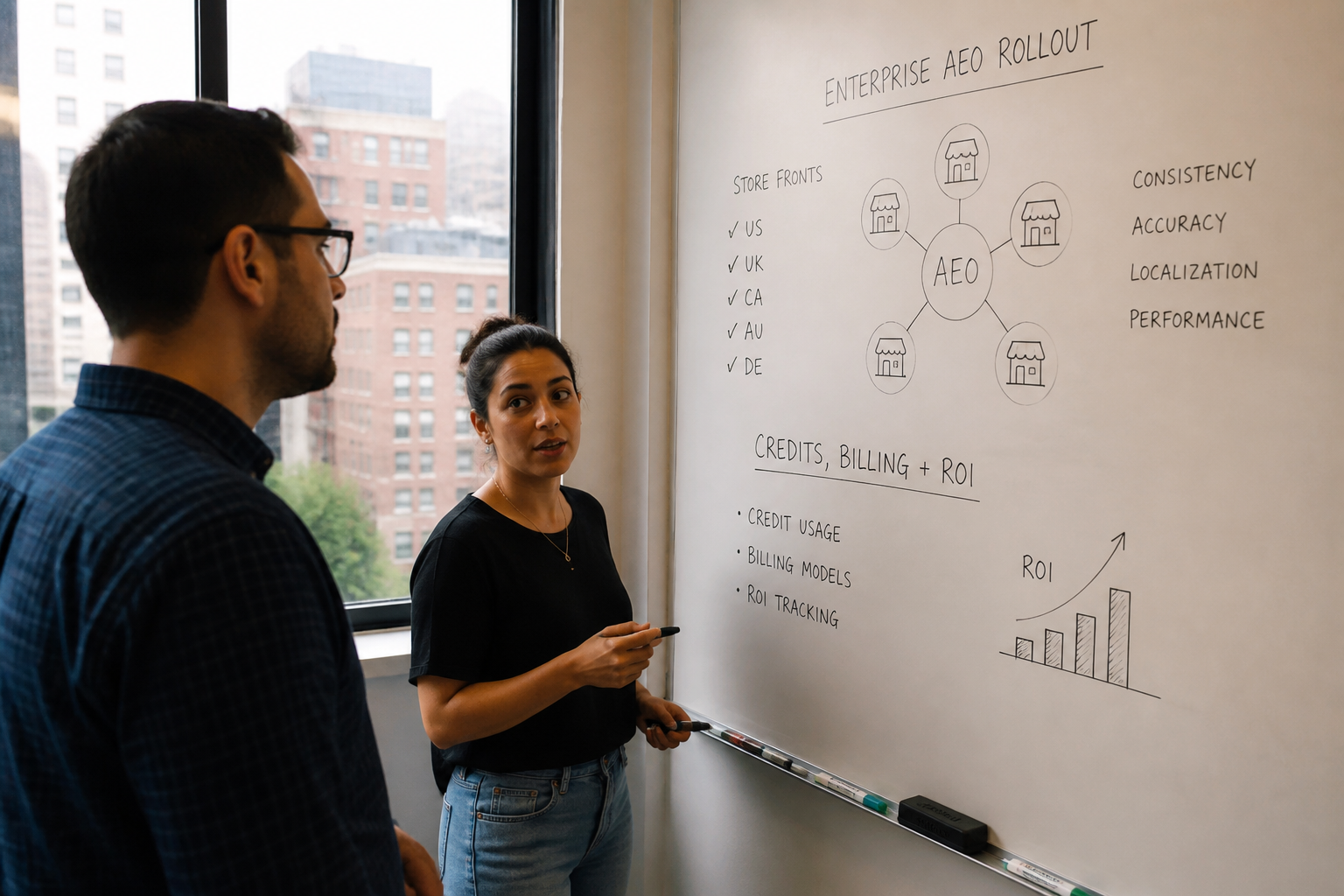
Rolling out AI-optimized content across multiple shops demands more than an ad-hoc approach. It requires a scalable strategy, centralized oversight, and real clarity into how resources are allocated and yielding ROI. Not only are you managing dozens (or hundreds) of content pieces, but you’re also responsible for budgeting and tracking AI content credit usage at an unprecedented scale. One misstep, and vital product info or FAQs are missing from high-priority channels, while credits leak into lower-impact areas.
Why AI-Optimized Content Distribution Matters for Enterprise
AI-first platforms—think Google’s SGE, Bing Copilot, Perplexity, and countless shopping bots—demand content that’s not just available but structured, authoritative, and current. Having a robust AEO strategy is especially critical for enterprises because:
- Brand continuity: Every storefront, region, and brand extension needs the same high-quality answers to protect reputation and trust.
- Operational efficiency: Wasted time duplicating effort or manually tracking credit use across properties cuts into margins.
- Centralized analytics: Enterprise reporting must track how credits spent on different stores and formats (like FAQs and buyer guides) drive engagement and revenue.
This is why a tool like OtoRank—with built-in credit management, audit trails, and bulk publishing—becomes indispensable.
Streamlining Bulk Creation and Deployment: Key Strategies
Let’s break down exactly how enterprises can roll out AEO content efficiently:
- Centralize Content Planning: Develop unified FAQ and buyer guide templates customizable per storefront. This ensures all shops answer key AI queries while allowing for local product or policy nuances. For more on strategic content differentiation, see FAQs vs. Buyer Guides: When to Use Each.
- Use Bulk Tools and APIs: Advanced platforms let you publish or update AEO content across multiple Shopify stores in one workflow. OtoRank’s dashboard, for instance, supports multi-store management with granular credit tracking per operation.
- Automate Credit Allocation: Set thresholds and quotas for credit spending per storefront to prevent ‘overdrafting’ low-priority shops while ensuring flagship stores never run out of AI content power. Learn more about optimizing credit distribution in How AI Content Credits Work (and How to Not Run Out).
Ensuring ROI: Credit Usage, Billing, and Performance Analytics at Scale
Accountability around credits and spend is paramount at the enterprise level. Legacy manual spreadsheets or scattered invoices just don’t cut it. Centralized, transparent credit ledgers—like the ones discussed in Credit Ledger Transparency: Auditing What You've Spent—let managers audit every transaction. This means you can:
- Pinpoint which stores or content types are driving the most AEO visibility and sales uplift
- Reallocate credits to high-performing initiatives in real time
- Show cross-team stakeholders and finance precisely how investment in AI content translates to ROI
OtoRank’s metrics don’t stop at credits; robust reporting shows how published FAQs or guides improve engagement, reduce support burden, and drive attributed revenue across your whole portfolio.
Governance and Guardrails: Avoiding Credit Waste and Content Drift
One of the largest risks in multi-storefront content is "content drift"—inconsistent answers, outdated policies, or missing localizations. Standardizing approval workflows, setting clear content expiration triggers, and version-tracking across stores prevents off-brand or obsolete AI answers from undermining your efforts. Credit guardrails (per-store limits, role-based permissions, and real-time alerts) ensure that budget is never silently siphoned off by lower-priority initiatives.
Having this governance layer in place also makes it easier to justify content investment and expansion to the C-suite. For more ways to build a business case around credits and content ROI, browse our Credits, Billing & ROI hub.
Unlocking Enterprise Value with AEO-Ready Content at Scale
The AI age is unforgiving of laggards: enterprises that fail to adapt their content and credit strategies for multiple storefronts will lose both visibility and revenue to those who do. OtoRank’s enterprise features—bulk management, transparent credit usage, and multi-store analytics—give your teams the tools for consistency, efficiency, and measurable ROI.
Your operations can move beyond firefighting and towards a proactive, data-driven approach that ensures every credit spent lifts brand authority, customer trust, and the bottom line. As AI answer engines grow more central to shopping journeys, this isn’t just operationally efficient; it’s existentially necessary.
Frequently asked questions
How can enterprises avoid wasting AI content credits across multiple storefronts?
Enterprises can set per-store credit quotas, use centralized dashboards for oversight, and implement approval workflows to ensure credits are allocated only to high-priority and strategically aligned content initiatives.
What analytics are essential for tracking ROI from AEO content in multi-store setups?
Key analytics include store-level credit consumption, which content types drive AI answer engine visibility, resulting sales or engagement uplift, and cross-store reporting on recurring investment versus attributed revenue.
How can businesses ensure consistent, up-to-date AI content across all their brands and regions?
Businesses should centralize content template management (for FAQs and guides), automate scheduled updates or refreshes, and enforce standardized approval and versioning workflows across all storefronts.
What happens if a store runs out of AI content credits during a bulk update?
Credit guardrails in tools like OtoRank can prevent bulk actions from overdrawing credits by alerting admins before updates complete, allowing you to reallocate or top up credits seamlessly.
Related reading
Check your own store's AEO score
No login, no email, just a score and what to fix first.