Guide
Why Most Shopify AEO Apps Only Solve Half the Problem (Files, Not Content)
Most Shopify AEO apps only address technical files, missing the foundational need for high-quality content. Discover why genuine AI discoverability depends on rewriting your product pages and FAQs, not just generating feeds.
Shopify AEO: Why File-Only Solutions Fall Short
Shopify merchants are becoming increasingly savvy about the importance of AI answer engines (AEO) like Google SGE, Perplexity, and ChatGPT in capturing new, high-converting traffic. With the dramatic 8x increase in AI-driven traffic projected by 2026, optimizing your store for these engines is no longer nice-to-have—it's mission critical. That urgency is fueling a boom in Shopify apps promising AEO readiness.
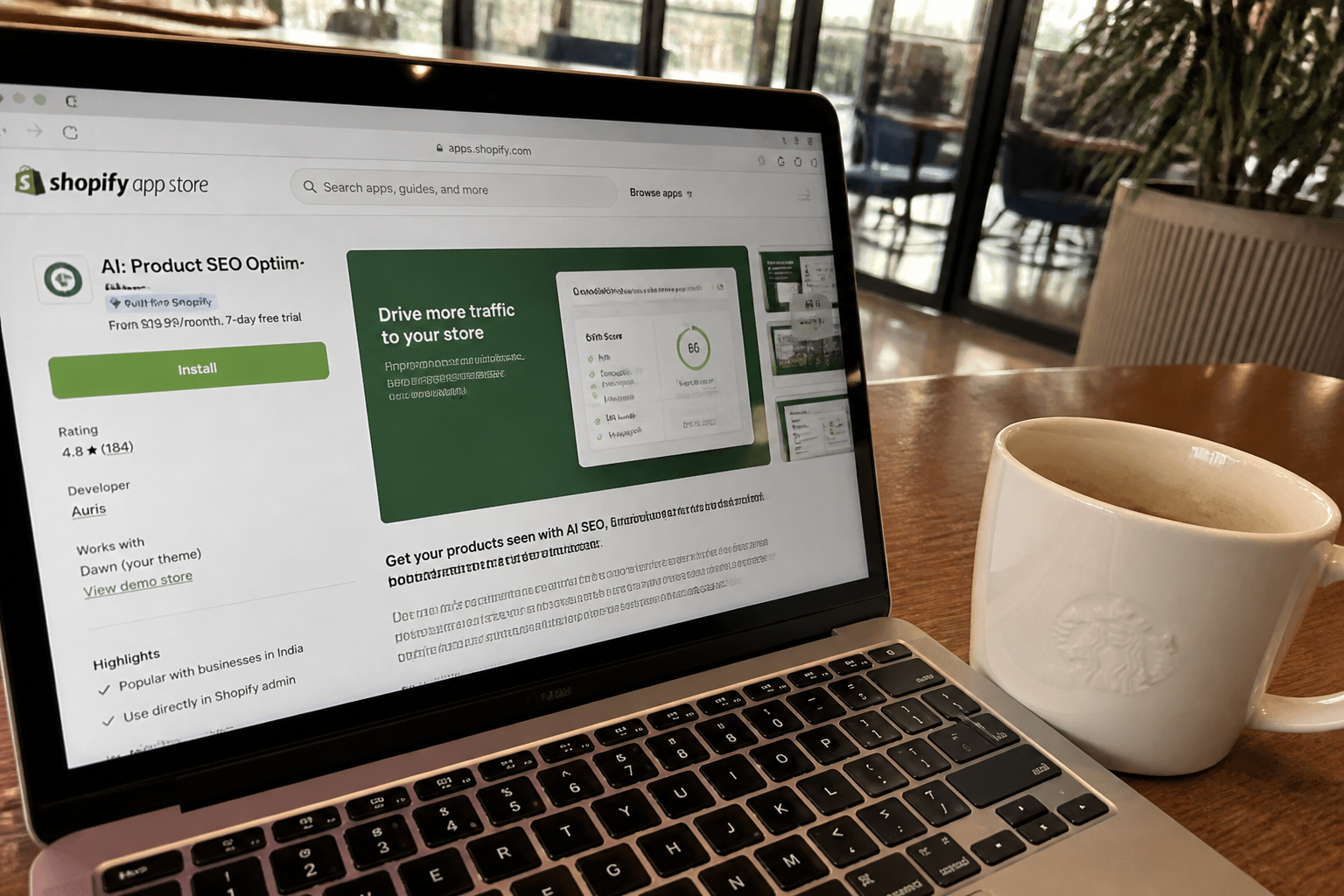
But most of today's "AEO apps" actually solve less than half the optimization puzzle. The typical approach? Generate (or reformat) structured data files—such as product feeds, FAQs, or JSON-LD snippets—for bots to crawl. While that sounds helpful, in practice it overlooks a crucial core of AEO: the underlying product and site content itself.
And that's exactly where so many merchants—and most app offerings—get tripped up. You can have the perfect FAQ schema or product feed file, but if your content is thin, outdated, or simply not written for how AI answer engines understand queries, your visibility and conversion rates will flatline.
The Two Halves of AEO: Files vs. Content
Let's break it down. Every effective Shopify AEO strategy must address two parallel tracks:
- Structured data files: These include product feeds, question-and-answer markup, and schema for core pages. These help AI engines efficiently gather factual details about your products and business.
- Actual content: Your product descriptions, collection pages, FAQs, blog posts, about and policy pages. It's this language that generative AI models reference to synthesize answers for potential customers—and that truly determines how (and whether) you appear in AI-driven search results.
Almost every "AEO" Shopify app in the store right now delivers the first—file generation, repackaging, or minor schema tweaks. Virtually none tackle the foundational content itself: rewriting, enriching, and optimizing what lives in your actual Shopify store for modern answer engines and the semantics of conversational AI.
Why File-Only Approaches Frustrate Merchants
Why is this such a big problem? Merchants assume Schema tweaks or FAQ files will level up their AEO, only to see no meaningful gains in impressions or conversion.
- AI answer engines often ignore file-only content: If your embedded FAQ answers repeat what's already public elsewhere, or your product data is boilerplate, LLMs simply skip you. They're trained on web-scale data, not just technical markup.
- Real-world queries are context-sensitive: For queries like "Are these yoga leggings squat-proof and available in petite sizing?" an engine needs to find those details within your visible copy—not just behind-the-scenes files.
- Semantics over syntax: AI systems prioritize stores whose wording aligns with how real users phrase questions. Templated, unoriginal content—no matter how well marked up—can't compete.
This gap is why merchants using the latest batch of AEO apps rarely see material improvement. In effect, these solutions make you technically compliant, but not genuinely discoverable in AI-driven answers where the real value lies.
What True AEO Optimization Requires
The next generation of AEO-ready stores will look very different. To consistently surface in AI answers and SGE panels, your Shopify store needs:
- Foundational content rewrites: Not just file tweaks, but real updates to the wording, clarity, and detail of your actual product pages—using the language customers use, not factory defaults.
- Unique, granular FAQs: Answers rooted in your store's real experience, specifics, and policy nuance—represented directly on-page, not just in hidden metadata.
- Consistent structure and entity alignment: Your "About," returns, sizing, and support information all need to echo across pages, using key phrases answer engines expect.
- Schema and files that match visible content: All structured data must reinforce what's actually on your site. Broken links or mismatches flag your store as untrustworthy to search engines and LLMs alike.
This is where apps like OtoRank are fundamentally different. Rather than just cranking out feed files, OtoRank rewrites and restructures your live Shopify content for AI engines—optimizing at the language layer, not just the file layer.
Want More Context? Where OtoRank Fits
If you're digging into which AEO solutions actually move the needle, it's crucial to frame things in the broader Shopify ecosystem. OtoRank is not a replacement for your native product catalog or new agentic storefront apps—it's a focused layer that bridges the gap between technical compliance and real-world discoverability. (See our deep dive on positioning.)
Similarly, if you want to compare all your options, the detailed market overview at The AEO App Category on the Shopify App Store: A Landscape Overview is a must-read.
Positioning Your Store for the AI-Powered Future
The bottom line: File-level tweaks alone won't get you there. True AEO is about giving AI engines the detailed, customer-centric content they're designed to understand. Only by updating and structuring the visible text of your actual Shopify store—supported by accurate, matching schema—can you capture the growth coming from AI-powered shopping journeys.
Want to understand where your AEO strategy stands? Start at our Shopify App Store Positioning hub for practical guides and up-to-date recommendations on future-proofing your visibility.
Frequently asked questions
Why don’t file-only AEO apps boost my Shopify store’s AI visibility?
File-only AEO apps focus on technical compliance by updating feeds or schema, but AI engines weigh real, on-page content and language much more heavily in their answers, so lacking quality copy limits your discoverability.
What’s actually required for effective AEO on Shopify?
Effective AEO requires rewriting and restructuring your product pages, FAQs, and site copy using customer-centric language, along with accurate schema that matches visible content to give AI engines the context they need.
How does OtoRank differ from typical AEO solutions?
OtoRank goes beyond technical files by directly optimizing the live content of your Shopify store—rewriting pages for language and structure that AI engines prefer, not just adding markup behind the scenes.
Can I rely on Shopify’s built-in SEO for AEO purposes?
Traditional SEO covers some basics but isn’t enough for AEO; answer engines need content crafted for conversational queries, detailed FAQs, and entity alignment across your whole store, which standard SEO tools don’t address.
Related reading
Check your own store's AEO score
No login, no email, just a score and what to fix first.