Guide
A Merchant's Map of the Shopify Agentic Commerce Stack (and Where Third-Party Apps Fit In)
The Shopify agentic commerce stack is evolving fast. Learn how native tools and third-party AEO apps like OtoRank fit together—so you can stay ahead in an AI-driven retail world.
Understanding the Agentic Commerce Stack on Shopify
As Shopify evolves, the ecommerce landscape is shifting under our feet. Between AI-driven search, assistant bots, and dynamic recommendation engines, merchants aren’t just optimizing for customers—they’re now building for the algorithms and agents that help guide those shopping journeys. This growing network of autonomous retail agents, collectively called the "agentic commerce stack," has redefined both discovery and checkout for Shopify stores.
But what does this actually mean for the average merchant? Instead of wrangling every lever themselves, they’re increasingly delegating (or competing with) various "agents": Shopify’s native tools, AI-powered engines, and specialized third-party apps. Knowing how, when, and why to orchestrate these layers is now as critical as picking your product catalog.
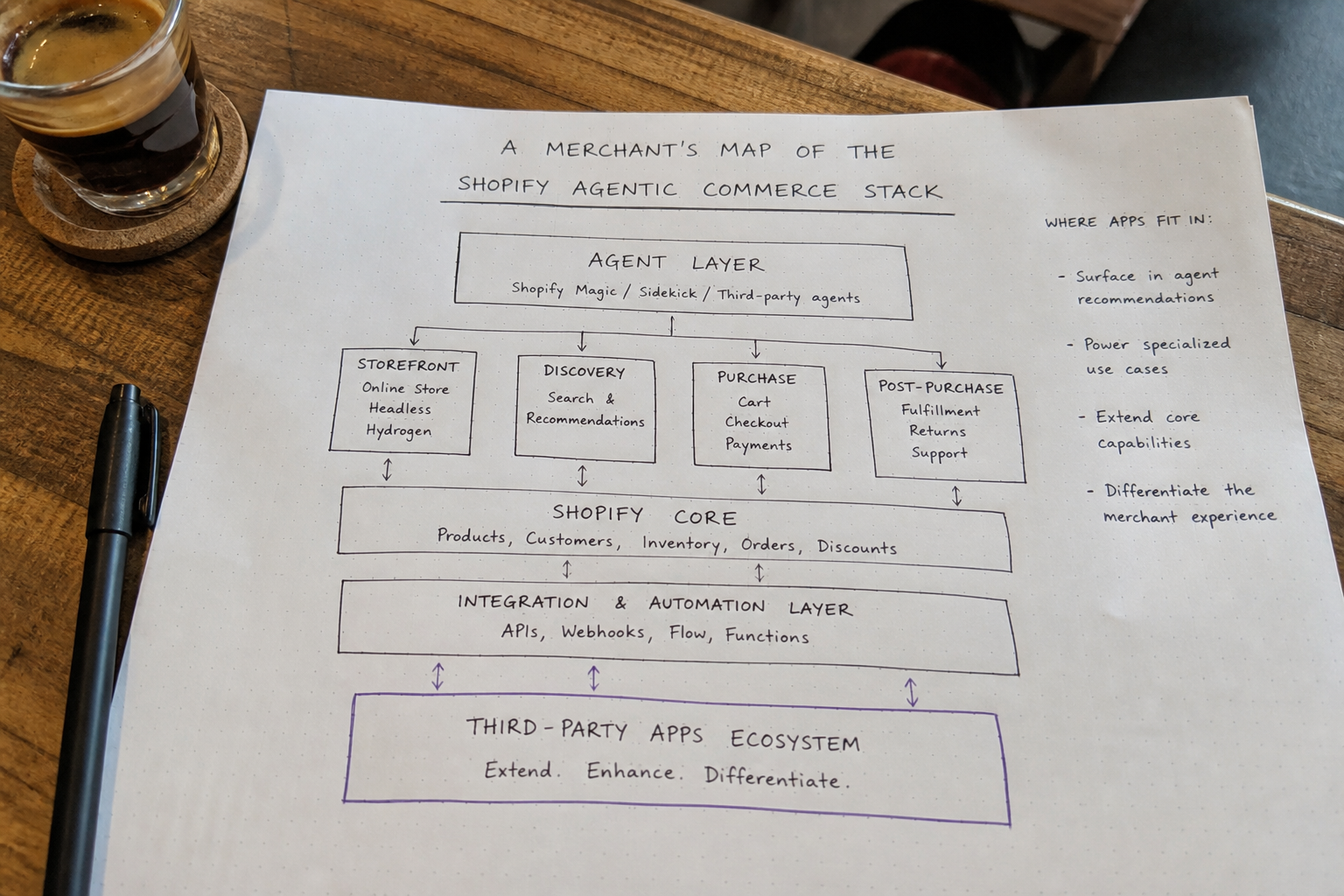
Let’s chart a practical merchant’s map of the agentic commerce stack, explaining where third-party apps (like OtoRank) fit in and how you should strategize your app store investments in this AI-powered era.
Mapping the Stack: What Are All These Agents?
First, let’s break down the major components. The agentic commerce stack, as it looks for a Shopify merchant today, is made up of:
- Native Shopify agents: These include Shopify’s search, product recommendations, AI-generated store content (Shopify Magic), and the Shop App’s shopping assistant.
- Third-party AEO and commerce apps: Apps like OtoRank, Avada, and a growing number of niche solutions help stores optimize for how AI engines—and not just humans—interpret and promote their products.
- External agentic surfaces: Google’s Shopping Graph, Bing, Meta, ChatGPT plugins, and other external AI systems that interact directly with your Shopify data via APIs and feeds.
While digital merchandising was once just about good copy and SEO for organic reach, retailers now have to think about how structured data, rich product context, and intent signals play into this complex agentic ecosystem.
Why Third-Party Apps Still Matter (and When They Don’t)
Given Shopify’s aggressive expansion into AI-native tooling, you might wonder if there’s any need for third-party apps. The short answer: Absolutely—if you want advanced control, unique store needs, or a competitive edge in new agent-driven surfaces.
For example, third-party AEO apps like OtoRank give merchants granular control over structured data, product relationships, and content specifically built to appeal to generative AI shopping engines and recommendation algorithms. Shopify’s native stack may offer solid default behaviors, but it’s designed for the broadest use case—meaning nuanced needs or keeping up with newer AI engines will often require external help.
Consider a store with a highly technical product or a specialty catalog (think: eco-friendly electronics or luxury heritage goods). Out-of-the-box Shopify may not present these distinctions loudly enough for external LLMs interpreting the store, but an app can help surface these details precisely for Google Shopping, Bing AI, or even Shopify’s own AI-powered product recommendations.
This "when do I need extra horsepower?" topic is tackled in detail in Agentic Plan vs. Shopify AEO Apps: Who Needs Which—a recommended read if you’re seeking use case-specific strategies.
How Agentic Optimization Differs (and Why It’s Not One-Size-Fits-All)
One of the biggest shifts for Shopify merchants: AI and agentic surfaces want information packaged differently than humans do. Structured comparison tables, explicit product feature lists, and schema-rich content are increasingly determining what gets spotlighted by engines like Google’s SGE or ChatGPT’s shopping assistants.
For example, OtoRank enables store owners to mark up comparison pages, bundle offers, and technical specs in ways that LLMs can parse and present succinctly to shoppers—even if those shoppers never land directly on your site. This is a tangible advantage over both SEO-only optimization or the catch-all Shopify AI tools. Want to see these strategies in depth? Check out Product Comparison Pages: Structuring Content for AI Recommendation Engines for hands-on templates and examples.
The bottom line: agentic commerce isn’t just about having "more data"—it’s about the right data, in the right language, with the right relationships tagged, so that both Shopify’s agents and the broader ecosystem can accurately represent your catalog.
Choosing the Right Stack: What Should Merchants Prioritize?
Here’s how merchants can orient themselves for agentic optimization:
- Audit your native coverage: Test Shopify’s own AI tools—see what’s working well by default and where gaps appear, especially for niche or complex catalogs.
- Prioritize external visibility: Consider which agentic surfaces (Google, ChatGPT, Shop App) matter most for your discovery—and ensure you’re optimizing data for each.
- Evaluate third-party power: Compare AEO-focused apps not just on checklists, but on real-world output: Do they give you measurable upticks in AI-driven traffic or recommendations?
For a down-to-earth breakdown, my recommendation is to see the head-to-head analysis of OtoRank vs. Avada AEO Optimizer: Which Shopify AEO App Fits Your Store?, especially if you’re early in your agentic commerce journey and want practical advice.
The Merchant’s Map: Your Next Steps
The agentic commerce stack isn’t a buzzword—it’s how modern Shopify stores compete for both customer eyes and the attention of recommendation agents. Third-party apps aren’t mere add-ons; for many merchants, they are the interpretive bridge between a store’s nuance and an algorithm’s summarization.
No map is perfect, but understanding your own stack means you can navigate the shifting terrain confidently. Lean into testing, watch for new AI agent surfaces, and remember: the winners aren’t just those who optimize for today’s buyers, but those who train their sites for tomorrow’s bots as well.
For ongoing strategies and a deeper look at how app positioning is evolving, bookmark the Shopify App Store Positioning hub—your basecamp as the agentic ecosystem expands.
Frequently asked questions
What is the Shopify agentic commerce stack?
The agentic commerce stack refers to the interconnected set of native Shopify AI tools, third-party AEO apps, and external AI-driven surfaces (like Google Shopping and ChatGPT) that influence how products are discovered, described, and recommended across the ecommerce landscape.
Do I still need third-party AEO apps if I use Shopify's built-in AI features?
Yes, in many cases. While Shopify's AI tools offer broad default optimization, third-party apps like OtoRank give merchants advanced control over structured data and can tailor store content for new or specialized agentic surfaces, boosting AI-driven discovery and recommendations.
How do agentic optimization strategies differ from traditional SEO?
Agentic optimization focuses on packaging data and content so they are easily interpreted by AI agents and recommendation engines—not just by humans. This means using rich structured schemas, explicit product relationships, and comparison templates to increase visibility on AI-powered surfaces.
How should I decide between different Shopify AEO apps?
Compare apps based on real-world effectiveness for your catalog—test their impact on structured data, external AI visibility, and uplifts in organic recommendations. For an in-depth comparison, see the article "OtoRank vs. Avada AEO Optimizer: Which Shopify AEO App Fits Your Store?" linked above.
Where can I learn more about Shopify App Store positioning?
Explore the Shopify App Store Positioning hub for comprehensive guides, comparisons, and strategies on how apps integrate into the agentic commerce stack.
Related reading
Check your own store's AEO score
No login, no email, just a score and what to fix first.