Guide
OtoRank vs. Lumos AI SEO & llms.txt: Choosing an AEO App for Multi-Agent Discovery
Choosing between OtoRank and Lumos for Shopify AEO comes down to structured, Shopify-native optimization vs. broader, less integrated approaches. Discover which solution gives your store the edge for multi-agent AI visibility.
The surge of AI-driven answer engines—think ChatGPT, Google Search Generative Experience (SGE), Perplexity, and a dozen more—has changed what it means for Shopify merchants to be "discoverable." Optimizing your store for multi-agent discovery is no longer a nice-to-have; it’s quickly becoming core to staying visible and competitive at the top of the funnel. As Shopify merchants scan the App Store, two solutions keep coming up for AI answer engine optimization: OtoRank and Lumos AI SEO & llms.txt. How do they compare for the unique demands of multi-agent answer optimization (AEO) and Shopify performance?
In this article, we’ll dive into exactly how OtoRank and Lumos differ when it comes to powering your storefront’s presence across modern LLM and agent-driven search. We’ll skip the generic platitudes and focus on the technical differences, operational workflows, and real-world impact. If you’re considering which platform to trust with AEO for Shopify, read on—we’ll also reference other app alternatives and best practices for context.
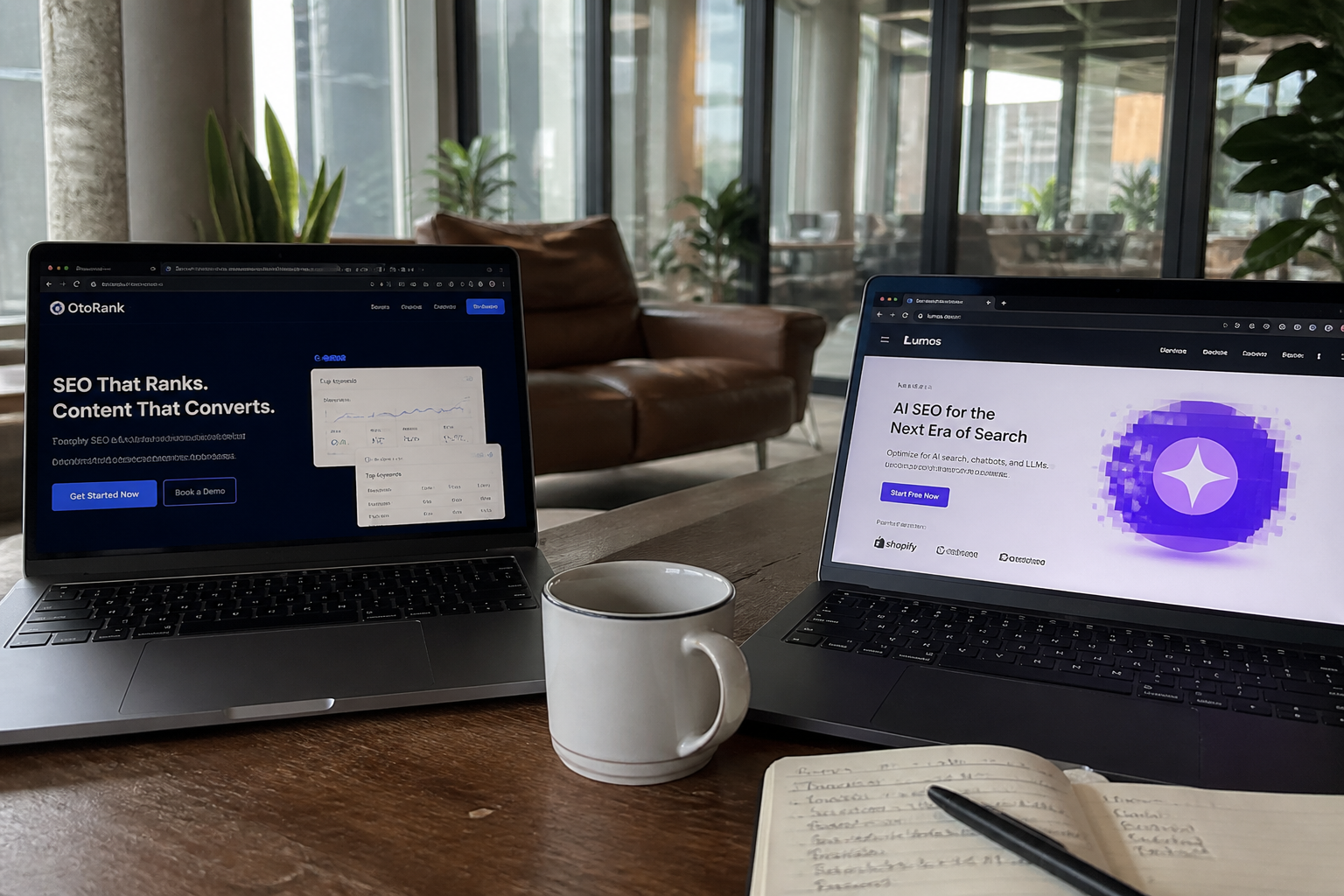
What Are OtoRank and Lumos AI SEO & llms.txt?
OtoRank is a Shopify-native AEO optimizer app designed specifically for store owners who want to boost their products’ and collections’ presence in LLM-powered engines. OtoRank generates structured sibling content (like Q&A, attribute facts, and semantic clusters) directly on product pages, leverages Shopify metafields, and manages site-wide context for accurate answer extraction. OtoRank is built for fully automated optimization and analytics, rapidly adapting as answer engines shift their requirements.
Lumos AI SEO & llms.txt is a cross-platform AI SEO tool. Though it supports Shopify, Lumos was designed primarily for traditional search (Google/Bing) and LLMs that crawl generic web content. Its key feature, llms.txt, is a directive file you upload to guide LLM crawlers. Lumos automates structured data and recommends AI-friendly content tweaks, but doesn’t focus deeply on Shopify’s unique context, metafields, or multi-agent analytics.
AEO Methods: Structured Sibling Content vs. Text Tweaks & Directives
Today’s answer engines need more than just readable content—they need contextually relevant, frequently updated, and non-repetitive structures to surface your store as the answer. Here’s where OtoRank and Lumos part ways:
- OtoRank dynamically inserts sibling content clusters (FAQs, structured facts, How-To schemas, comparison tables) using Shopify metafields, ensuring every product, variant, and collection page serves clear, contextually unique blocks that agents prefer. This leverages findings like those in Why Sibling-Content Context Prevents Repetitive AI-Generated Copy, avoiding the boilerplate LLMs penalize.
- Lumos emphasizes modifying global site content and submitting an external
llms.txtto influence crawlers. While it adds some structured data, its approach can result in duplicated tips or shallow recommendations, especially on multi-product, highly categorized Shopify stores.
In practice, OtoRank’s page-by-page sibling content is favored by answer engines that synthesize answers on the fly, particularly when stores have hundreds or thousands of products. This is something generic directive files can’t achieve alone.
Shopify Integration and Workflow
Integration tightness makes or breaks merchant AEO efforts. OtoRank is a Shopify-first app that slots directly into any theme and leverages Shopify metafields, so optimizing content, reviewing performance, and scaling changes take just a few minutes—no coding, copy/pasting, or site rebuilds. Features like automated metafield population and performance analytics (impressions, clickthrough from agents, AEO error alerts) are native.
By contrast, Lumos acts as a "bolt-on" tool that asks Shopify merchants to generate and upload static files (like llms.txt) manually. Content changes and schema insertions are done via platform-agnostic tools, which may require custom development to integrate precisely with Shopify data structures and theme layouts.
- OtoRank: Point-and-click to customize Q&A, attribute facts, and more at scale. Instantly audit optimization progress per product/collection.
- Lumos: Bulk content recommendations and CSV-powered data exports, but less granular, with reporting focused on generic SEO rather than Shopify AEO specifics.
Multi-Agent Discovery: Metrics That Matter
Which app helps you actually win visibility in answer engines, not just guess? OtoRank stands out here with native analytics showing impressions, clicks, and answer presence in agents like ChatGPT, Perplexity, and Google SGE—not just classical search positions. OtoRank detects if your content is being cited or shown as a direct answer, so you see real AEO impact, not just theory.
Lumos offers exposure and keyword ranking tools primarily using traditional SEO KPIs. You can measure organic traffic shifts, but precise answer engine engagement or citation analytics for Shopify pages are limited. If you care about LLM and multi-agent channels directly (not just "SEO traffic"), OtoRank brings the actionable attribution you’ll need.
For more nuanced comparisons to other multi-agent AEO apps, check out OtoRank vs. Booster AI SEO + AEO Optimizer: A Feature-by-Feature Comparison and OtoRank vs. LLM Rank: Comparing AI Visibility Tools for Shopify.
Platform Support, Updates, and Support
Because OtoRank is focused on Shopify, every new answer engine algorithm change—whether from OpenAI, Google, or Anthropic—is reflected in rapid-fire app updates. Merchant support is Shopify-specific: theme issues, metafield quirks, and liquid insertions are well understood.
Lumos, serving a wide range of CMS and commerce platforms, updates more slowly for Shopify-specific needs. Its support can answer general AI SEO questions, but hands-on Shopify merchant troubleshooting may be limited or require intervention from non-Shopify-native developers.
Making the Right AEO Choice for Shopify
If your goal is precise, scalable optimization for modern answer agents—and not just boosting traditional search—OtoRank aligns closer to Shopify merchants’ needs. It’s built for ongoing algorithm flux, multi-product automation, and tangible analytics across AI channels. Lumos brings helpful cross-platform basics, especially if you need llms.txt-style directives for non-Shopify systems, but requires extra work to fully unlock Shopify’s technical edge.
A good AEO strategy is about progressive, context-aware content, robust agent analytics, and integrations that don’t slow you down. Want to dive deeper into Shopify App Store differentiation? Don’t miss our Shopify App Store Positioning hub for additional insights and strategies.
Frequently asked questions
What makes OtoRank better for Shopify AEO than Lumos?
OtoRank is built specifically for Shopify, using metafields and theme integrations to generate context-rich sibling content that modern answer engines prefer. Lumos is a cross-platform tool with less granular Shopify optimization and focuses more on generic file directives like llms.txt.
Does OtoRank help with traditional SEO or just AI answer engines?
OtoRank boosts both, but is uniquely optimized for AI answer engines (like ChatGPT, Perplexity, and SGE). Its structured content also enhances conventional SEO by increasing semantic richness and site relevance.
What is llms.txt, and do I need it for Shopify AEO?
llms.txt is a file directive for LLM crawlers to help them understand which content to index. While helpful for some web contexts, Shopify merchants benefit more from robust on-page structured data and sibling content, which OtoRank automates.
Can I use OtoRank and Lumos together?
Yes, but overlap is minimal. OtoRank handles deep Shopify AEO; Lumos can supplement broader file-based directives for sites you manage outside Shopify. For Shopify alone, OtoRank covers all AEO bases.
How does OtoRank’s analytics compare to Lumos for answer engine visibility?
OtoRank provides real AEO analytics, tracking when your content appears as a cited answer in various agents. Lumos focuses mainly on traditional SEO metrics, offering less insight into LLM-specific performance.
Related reading
Check your own store's AEO score
No login, no email, just a score and what to fix first.