Guide
When to Upgrade Your AEO Plan: Signals to Watch
Knowing when to upgrade your AEO plan is crucial for maximizing Shopify store growth. Learn which credit, ROI, and catalog signals indicate it’s time to scale up.
Understanding When Your Store Needs an AEO Plan Upgrade
AI answer optimization (AEO) has quickly become a pivotal strategy for Shopify merchants aiming to claim visibility within AI-powered search engines and smart assistants. Yet with OtoRank's flexible credit-based plans, it can be tricky to judge exactly when your current subscription isn’t enough—especially if you want to maximize ROI and avoid unnecessary spend. So, how do you know when it’s time to consider upgrading your AEO plan?
Let’s walk through the concrete signals that suggest you’re ready to scale up, how to interpret your usage patterns, and what to watch for as your AI-optimized content efforts grow. We’ll draw on merchant experiences and real examples, as well as actionable insights from our Credits, Billing & ROI hub.
The Core Signals: Running Low on Credits
OtoRank’s plans are credit-driven. Each credit powers a defined set of AEO activities, such as generating just-the-right answers for product and category pages, or pushing batch optimizations for hundreds (or thousands) of SKUs. The first—and most obvious—signal it’s time to consider upgrading your plan? Running out of credits faster than expected.
Let’s say you’re consistently maxing out your monthly quota, with days or even weeks left before credits reset. Are you:
- Expanding your catalog more rapidly than planned?
- Rolling out new product lines or seasonal campaigns?
- Launching new sales channels (Amazon, Walmart, etc.) and needing answer coverage for them?
- Losing the ability to optimize high-priority landing pages because you’re out of credits?
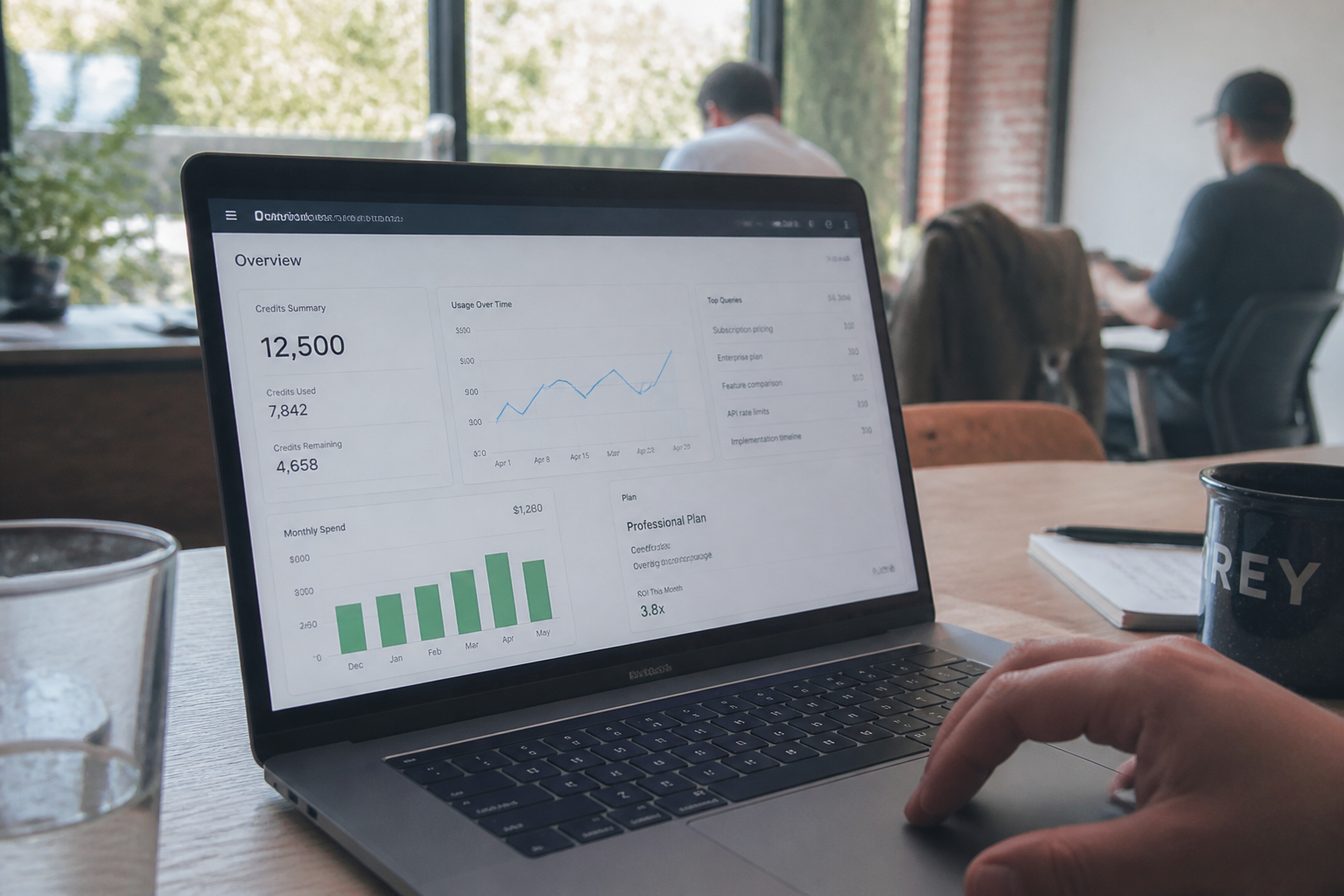
These are all signals that your current plan needs to match your ambitions—or risk missing out on valuable AI search real estate. Merchants running 5,000+ SKUs, for example, often see a significant inflection point in required credits (and the impact of AEO) once they take bulk-generation live across their full catalog, as discussed further in Bulk-Generating Content Across a 5,000-SKU Catalog Without Losing Quality.
Content Ambitions vs. Current Capacity
Even if you aren’t running out of credits every month, you might find your current plan limits your growth speed. For instance, if you’re forced to pick and choose which collections or product families get optimized for AI engines—rather than rolling out comprehensive coverage—you may be underserving potential high-revenue areas of your store.
This tradeoff becomes especially clear with large catalogs. If you’re budgeting your AI content spend across thousands of SKUs, as explored in Budgeting AI Content Spend Across a 10,000-SKU Store, you’ll notice that SKU expansion directly increases your AEO requirements. Doing the math on how much it costs to properly optimize each product for AI-driven channels often reveals when the credit gap is holding you back from aggressive growth.
Tracking ROI: The Most Important Upgrade Signal
While credit consumption is important, the gold standard for deciding when to upgrade is ROI (return on investment). It’s easy to focus on spend and quotas, but the key question is whether additional AEO coverage is delivering measurable gains. Are you seeing:
- Improved visibility for your products on AI-driven search engines and voice assistants?
- Higher organic traffic from question-answer platforms (like Google SGE or Bing Copilot)?
- More conversions from AI-optimized landing pages?
- Reduced bounce rates as on-site search gets clearer, faster answers?
Monitoring the connection between AEO credit spend and bottom-line improvements is critical. Merchants who audit their credit ledger—keeping a tight grip on what’s spent and what’s achieved—are best positioned to justify upgrading plan tiers. See Credit Ledger Transparency: Auditing What You've Spent for detailed strategies on keeping your spend-and-benefit ratio crystal clear.
Emerging Store Signals: A Checklist
Ready to spot the subtle, often-overlooked signals that it might be upgrade time? Here’s a quick checklist of situations where an AEO plan increase is usually warranted:
- Your catalog is expanding via dropshipping partnerships, internal launches, or acquisitions.
- You’re entering new markets or creating local-language product variants.
- Your organic search traffic or engagement metrics plateau, despite new content pushes elsewhere.
- You’re segmenting landing pages for special campaigns (Black Friday, back-to-school, etc.), but can’t afford to optimize them all at once.
- Analytics show key competitors outperforming your products in AI-generated answer boxes for crucial queries.
Noticing even a few of these scenarios is a strong prompt to reassess your plan size—or risk leaving visibility and revenue on the table.
How to Plan Your Upgrade Responsibly
Once you spot the need, don’t just jump to a higher plan without a strategy. Map out the incremental benefit you want (extra categories covered, more SKUs optimized, seasonality support), and set targets for what a plan upgrade should achieve. Many merchants find it helpful to test-sprint: upgrade for a month, measure results, and then decide whether to maintain, scale back, or go even bigger.
Balancing credit spend means knowing your catalog’s needs, tracking outcomes, and using transparency tools to ensure you’re not paying for unused capacity. OtoRank’s ledger and dashboard features make it easy to run these diagnostics without costly guesswork.
Conclusion
Upgrading your AEO plan isn’t just a matter of having more to spend—it’s about matching your optimization efforts with your store’s actual ambitions, product coverage, and growth pace. Watch for usage spikes, ROI signals, and bottlenecks in your current capacity to know exactly when and how to level up. For more practical guidance on managing your investment, dive into our Credits, Billing & ROI hub for even deeper insights.
Frequently asked questions
What signs show I'm ready to upgrade my AEO plan?
Running out of credits early, consistently limiting the products or pages you can optimize, or seeing ROI from recent optimizations are strong indicators you should consider a higher AEO plan.
How do I make sure I'm not overspending when upgrading?
Track your credit usage with OtoRank's ledger, set clear optimization goals, and upgrade incrementally to measure if extra capacity leads to improved traffic or conversions.
Can a plan upgrade help boost my store's organic AI search visibility?
Yes—a higher-tier plan lets you cover more products and landing pages, increasing your representation in AI-generated answer boxes across multiple channels.
Should I upgrade my AEO plan during seasonal campaigns?
If you have many campaign-specific landing pages or expect a catalog surge, a temporary plan upgrade can ensure you don’t miss out on search and conversion opportunities.
Where can I learn more about managing credits and ROI for my AEO investment?
Visit the Credits, Billing & ROI hub on our blog for detailed guides, budgeting strategies, and real merchant examples.
Related reading
Check your own store's AEO score
No login, no email, just a score and what to fix first.