Guide
Which AI Platforms Are Actually Sending You Shoppers?
AI answer engines now send hidden streams of shoppers to Shopify stores. Learn exactly which platforms are driving real traffic, and how to track AI referrals.
Where Are Your AI-Driven Shoppers Really Coming From?
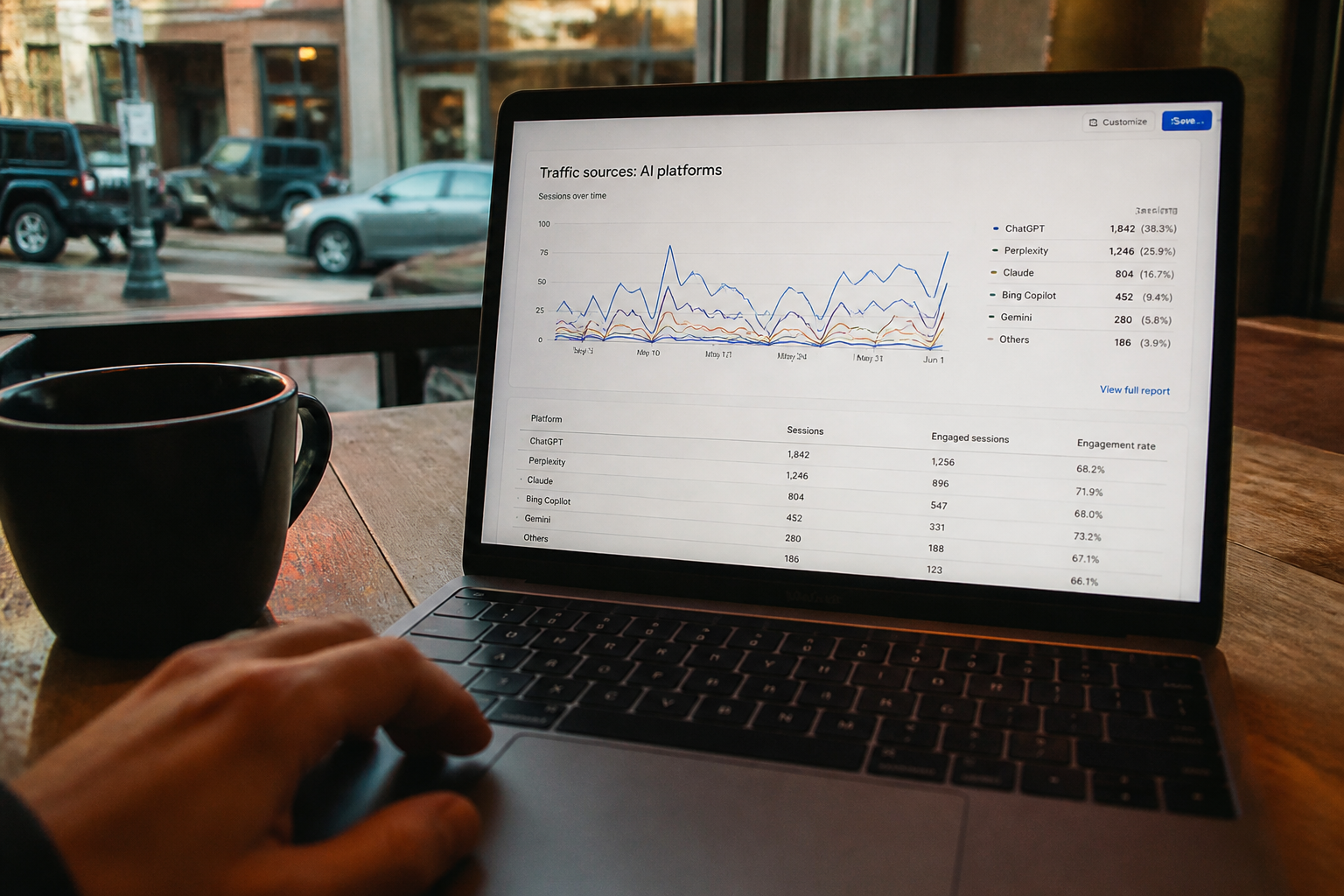
Increasingly, Shopify merchants are reporting a new kind of customer — one who lands on product pages from unfamiliar referral URLs or via search phrases that sound distinctly AI-generated. As AI answer engines like Google SGE, Microsoft Copilot, and ChatGPT’s web browsing features gain traction, understanding which platforms are actually sending shoppers is no longer a futuristic concern — it’s an urgent puzzle for brands investing in AEO (Answer Engine Optimization).
The challenge is simple to state but tough to solve: traditional referral analytics were built for browser-based users clicking links from Google, Facebook, or email. But modern AI platforms can surface your products in summaries, voice responses, or chat conversations, often handing off buyers to your Shopify store through indirect, opaque routes. So, how do you identify and measure these AI referrals — and decide which AEO efforts are really working?
Why AI Referral Attribution Is So Murky (and Important)
AI traffic doesn’t always show up with a neat referrer code. Take Google SGE: a user might see your product highlighted in an AI snapshot, and click through — but the resulting session in Shopify analytics can appear as “Direct” or generic “Unknown” traffic. Microsoft Copilot, meanwhile, might link users directly to your PDP, often scrubbing or masking referral metadata along the way. And voice assistants like Alexa or Siri can open your site with even less traceable attribution.
This opacity creates real business risks. Merchants investing time and budget into AEO need proof that their optimizations are bringing in actual shoppers (not just bots or demo traffic). Stakeholders want to see how AI platforms compare to search and social when it comes to driving ready-to-buy visitors — an issue explored further in Proving AEO ROI to Stakeholders With Real Order Data.
Which AI Platforms Are Actually Referring Shoppers?
Let’s break down the major players currently driving real, attributable ecommerce traffic for Shopify stores, based both on OtoRank’s observations across thousands of merchant stores and public industry data.
- Google SGE (Search Generative Experience): Since its rollout, SGE has sent a modest but growing share of traffic — mostly to stores who rank well in product reviews or have schema-rich product detail pages. Look for
google.comwith strange paths, or examine spikes in "Direct" mobile sessions after SGE launches in new regions. - Microsoft Copilot: Copilot’s shopping answers are starting to drive referral spikes, particularly for tech and electronics niches where Microsoft’s own marketplaces overlap. Watch for
copilot.microsoft.comand closely related subdomains in referral logs — though anonymized traffic is common. - ChatGPT Browse (via OpenAI): For users who enable browsing in ChatGPT, recommended products and merchants can appear as direct hyperlinks. You’ll rarely see an explicit referrer, but OtoRank’s attribution models identify “ChatGPT-like” session patterns — such as sudden sessions with clipped user agents and high engagement from markets with large ChatGPT adoption.
- Voice Assistants: Siri and Alexa are harder to track, but may be spotted through sudden traffic surges on action-oriented landing pages, especially following voice query launches or promotions. Still, almost all appear as “Direct” in analytics, making AI-specific attribution tools essential.
- Emerging Answer Engines: Niche bots (like Perplexity, You.com, or Meta AI search) are sending small but rapidly increasing trickles of traffic — again, rarely with clear referrers, but sometimes with unusual URL parameters or distinct user-agent strings.
One theme is clear: out-of-the-box Shopify analytics will miss most AI referrals. Relying only on referral URLs leaves gaps, especially as AI models often act as proxies or intermediaries for their users.
Diagnosing Hidden AI Referrals: What Can Merchants Do?
How can you peek behind the curtain? There’s no single silver bullet, but here are some presently effective tactics for Shopify merchants:
- Pattern Analysis: Compare timestamps of SGE, Copilot, or ChatGPT updates with spikes in high-engagement, “direct” traffic to key PDPs. If you see users landing deep (not just on your homepage) immediately after such launches, it’s often an AI handoff.
- Enhanced Attribution Tools: Use apps or platforms (like OtoRank’s AI-Referral tools) that monitor AI-specific signals. These look for unique behavioral patterns, metadata, and emerging AI user agents overlooked by generic analytics.
- Custom Landing Pages & UTM Codes: Where possible, create campaign-specific URLs tied to likely AI answers (e.g. schema-rich Q&A content). In rare cases, platforms like Google SGE may preserve some campaign codes on their outgoing links.
- Catalog Crawlability: Ensure your site’s product catalog is machine-readable and accessible to LLMs and bots, as discussed in Crawlability 101: Making Your Catalog Legible to LLMs. If your content isn’t discoverable by AI engines, you’ll never get the chance to troubleshoot their traffic!
For merchants who want a deep dive on attribution approaches, the guide Attribution Models for AI-Driven Ecommerce Traffic provides a side-by-side of traditional models versus ones designed for the AI era. And for an ongoing look at trends and solutions, bookmark the AI-Referral Attribution hub.
The Bottom Line: Attribution Isn't Optional
The reality for ecommerce in 2024 is that AI isn’t just reshaping the SERP — it’s quietly becoming a primary traffic driver for certain verticals. But if you can’t see where your AI-driven customers are coming from, you can’t optimize for, report on, or intelligently invest in these sources. Winning at AEO now means mastering new attribution approaches, blending smart analytics with purpose-built tools to illuminate the formerly invisible corridors of AI-driven discovery and conversion.
The first step: go beyond your default reports. The future of Shopify growth will belong to those who trace every order back to its true source, whether human, algorithmic, or — increasingly — both.
Frequently asked questions
How can I tell if traffic is coming from AI platforms like Google SGE or ChatGPT?
AI referrals often appear as 'Direct' or 'Unknown' in Shopify dashboards. To detect them, monitor for surges in deep-page sessions following SGE or ChatGPT launches, analyze user agent patterns for clues, and use advanced attribution tools that recognize AI-specific user behaviors.
Which AI engines are sending the most shoppers to ecommerce stores today?
Currently, Google SGE and Microsoft Copilot contribute the bulk of AI-referred traffic, but smaller flows from ChatGPT, Perplexity, and Meta AI are on the rise, especially for merchants with well-structured, crawlable product data.
Can traditional analytics tools track AI referrals accurately?
Not reliably. Most AI traffic is obscured in standard analytics tools, as AI platforms often mask or omit referrer information. Merchants need specialized attribution apps and methodologies to accurately surface these visits.
What concrete steps can I take to make my Shopify store more discoverable by AI engines?
Ensure your catalog is crawlable by LLMs, use schema-rich content and Q&A formats, and monitor crawl logs for AI bot activity. For more details, see the article 'Crawlability 101: Making Your Catalog Legible to LLMs.'
Related reading
Check your own store's AEO score
No login, no email, just a score and what to fix first.