Guide
Attribution Models for AI-Driven Ecommerce Traffic
AI answer engines are transforming ecommerce traffic, but they're notoriously hard to track. Learn how to build modern attribution models for accurate insight.
Understanding Attribution in the Age of AI Traffic
The ecommerce landscape has shifted dramatically with the rise of AI answer engines and recommendation platforms. Shoppers are no longer finding shops solely through classic search engines, social, or ads; increasingly, they’re arriving after interacting with AI-driven sources such as Google’s Search Generative Experience (SGE), Bing Copilot, ChatGPT plugins, or Perplexity AI. This change presents both a huge opportunity and a major challenge: how do you attribute revenue and behavior to these opaque, fast-evolving AI referral sources?
Traditional attribution models — last-click, first-touch, linear, and position-based — struggle in a world where an AI agent summarizes websites, product pages, and social signals, then sends users straight to product or collections pages. Frequently, these referrals lack source tags or reliable parameters in the session. That’s why choosing and implementing new attribution models tailored for AI-initiated journeys is rapidly becoming critical for Shopify merchants.
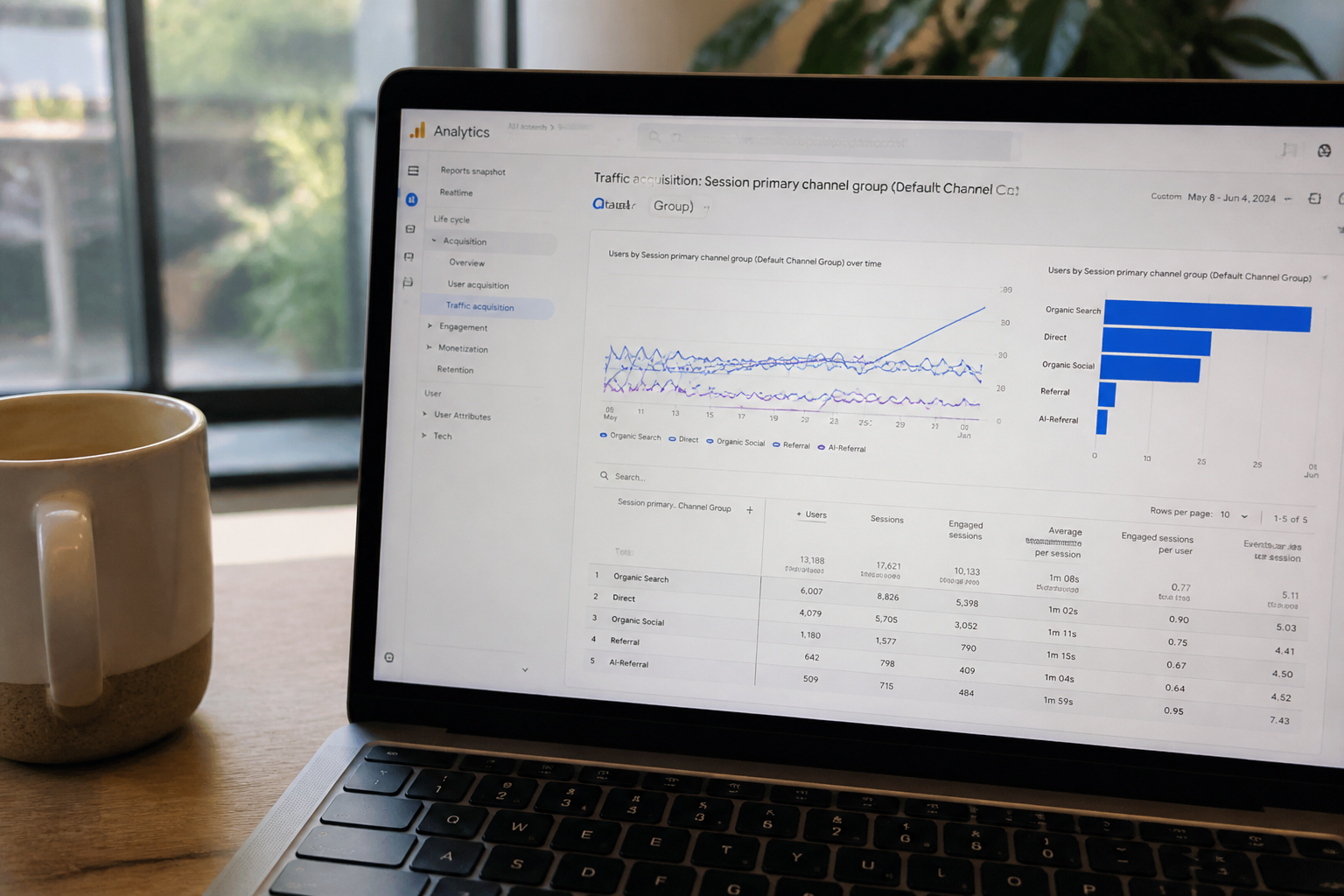
AI Referral Attribution: Why Traditional Models Fall Short
Classic digital attribution generally depends on direct signals: UTM parameters, referrer headers, or cookies dropped during a user session. But AI answer engines often cloak their traffic origins, sending users from zero-click summaries, or via redirections that strip these identifiers. For instance, a consumer might ask Bing Copilot for "best Shopify stores selling eco-friendly water bottles," get a curated answer, and click through – leaving little to no conventional attribution footprint.
This lack of persistent, identifying metadata makes it hard to use conventional analytics alone for source tracking. Instead, merchants are turning to blended approaches, triangulating clues across order patterns, landing page trends, and indirect signals. The challenge: how do you fairly assign credit to AI-driven interactions, especially when they amplify or shortcut other marketing channels?
The foundational concepts of AI-referral attribution are detailed in our AI-Referral Attribution hub, but let's dig deeper into the modeling itself.
Modern Attribution Models For AI Traffic
Merchants pursuing AI-ready attribution are experimenting with several key models and techniques:
- Heuristic Pattern Matching: By analyzing spikes in direct/organic traffic in tandem with known AI engine updates or search trends, merchants can infer likely AI referrals. For example, if Google’s SGE introduces your brand in product recommendations and direct visits spike, it likely signals AI-driven exposure.
- Page & Query Mapping: Monitoring entry page paths and device signatures can help identify surges in traffic to product, FAQ, or cluster pages after high-profile AI indexation events. This approach is enhanced if you maintain clusters of topical content (see Collections as Content Clusters: Structuring for AI and Humans).
- Backfilling Techniques: Leveraging historical orders, merchants can retroactively map hidden referral patterns even for orders placed before new tracking was set up. Our guide, Backfilling Historical Orders to Find Hidden AI Referrals, shows practical steps for this process.
- Custom Channel Bucketing: Some apps and analytics platforms now let you define a quasi-channel such as "AI referrals," using a combination of session behavior, device type, and landing page data to create likely inferences of AI-driven sources.
Ultimately, the goal is to combine these new models to identify and quantify AI-derived traffic even when explicit attribution data is lacking. This makes for a more honest picture of your store’s true sources of growth.
Concrete Example: Tracking a Perplexity AI-Driven Sale
Suppose you notice a sudden uptick in orders for a newly launched product. Reviewing your analytics, there’s no paid traffic, no new influencer posts, but you do spot several same-day direct visits to the product page — all with mobile devices and short page sessions, converging from geographic regions with heavy AI adoption.
You check Perplexity’s public answer index and see your product listed in response to a “best [category] gifts” prompt. No UTM tags appear, but by tying the timing, new landing page pattern, and customer order comments (a couple even mention "found you via AI"!), you attribute incremental revenue to this AI referral.
Would last-click attribution ever reveal this? No — it simply marks it as "Direct". An AI-adaptive model gives you actionable insight, letting you optimize for these new touchpoints.
Which AI Platforms Deserve Attribution Credit?
Not all AI answer engines work the same. Some, like Google SGE, may pass referrals invisibly. Others, like Bing Chat/Copilot, may use redirection URLs. Some up-and-coming engines can obscure origins entirely. Our article, Which AI Platforms Are Actually Sending You Shoppers?, breaks down referral patterns by platform, helping you focus your monitoring and model-building efforts for maximum accuracy.
The practical upshot: treat your attribution modeling as a living process. As AI platforms evolve, so must your detection methods and reporting. Stay open to adapting your models and leveraging blended approaches — the landscape is shifting fast.
Best Practices for Shopify Merchants
- Review direct and organic traffic spikes in tandem with known AI product launches or major feature updates.
- Structure collections and product clusters to align with the information architecture favored by AI answer engines.
- Periodically backfill attribution data using order notes, survey fields, and device/landing page analytics (see detailed workflows).
- Leverage new analytics apps built for AI attribution, such as OtoRank, for ongoing, automated detection and reporting.
Above all, maintain a flexible, curious mindset — AI shopping journeys will only become more important. Accurate attribution now can mean a lasting edge over competitors clinging to outdated models.
Frequently asked questions
Why can't traditional attribution models handle AI-driven traffic?
AI-driven referrals often lack classic signals like UTM parameters or referrer headers. These clicks may arrive as 'direct' or 'organic' in analytics, making it difficult for traditional models to accurately assign credit.
How can I detect if AI answer engines are sending me shoppers?
Look for patterns such as unexplained spikes in direct traffic, increased landing on informational or product cluster pages, and customer order notes mentioning AI platforms. Also, cross-reference AI engine indices to see if your store is listed for relevant queries.
What should I do if I can't see AI referrals in my analytics?
Combine heuristic pattern-matching, backfilling historical data, and custom channel definitions to better infer AI-based referrals. Reference your own site’s analytics alongside public AI answer engine activity.
Are there tools to automate AI referral attribution?
Yes. Platforms like OtoRank are built to continuously monitor for AI-driven traffic, uncover hidden referrals, and help merchants adapt attribution models as the AI ecosystem evolves.
Related reading
Check your own store's AEO score
No login, no email, just a score and what to fix first.