Guide
Backfilling Historical Orders to Find Hidden AI Referrals
Many AI-driven sales go unrecognized in traditional Shopify analytics. Learn how to backfill historical orders to attribute and optimize for hidden AI referrals.
Why Backfill Historical Orders for AI Referral Insight?
AI shopping assistants—like Google’s Search Generative Experience, Bing Copilot, or ChatGPT—they’re no longer just futuristic concepts. They are quietly influencing which Shopify merchants win new customers by surfacing store recommendations inside conversational answers. But for most store owners, a major blindspot remains: traditional analytics rarely report on these subtle AI-driven referrals. So how do you unearth those hidden wins? The answer lies in backfilling your historical order data, connecting past sales to new AI-attributed touchpoints.
Unlike the clear trail left by classic SEO or paid advertising, customers steered to you by AI assistants often arrive as if by magic—sometimes looking like "direct" traffic, sometimes as referrals from unexpected sources. Without proactive investigation, these silent successes go unrecognized in your metrics, muddying your true acquisition cost and missing valuable optimization opportunities.
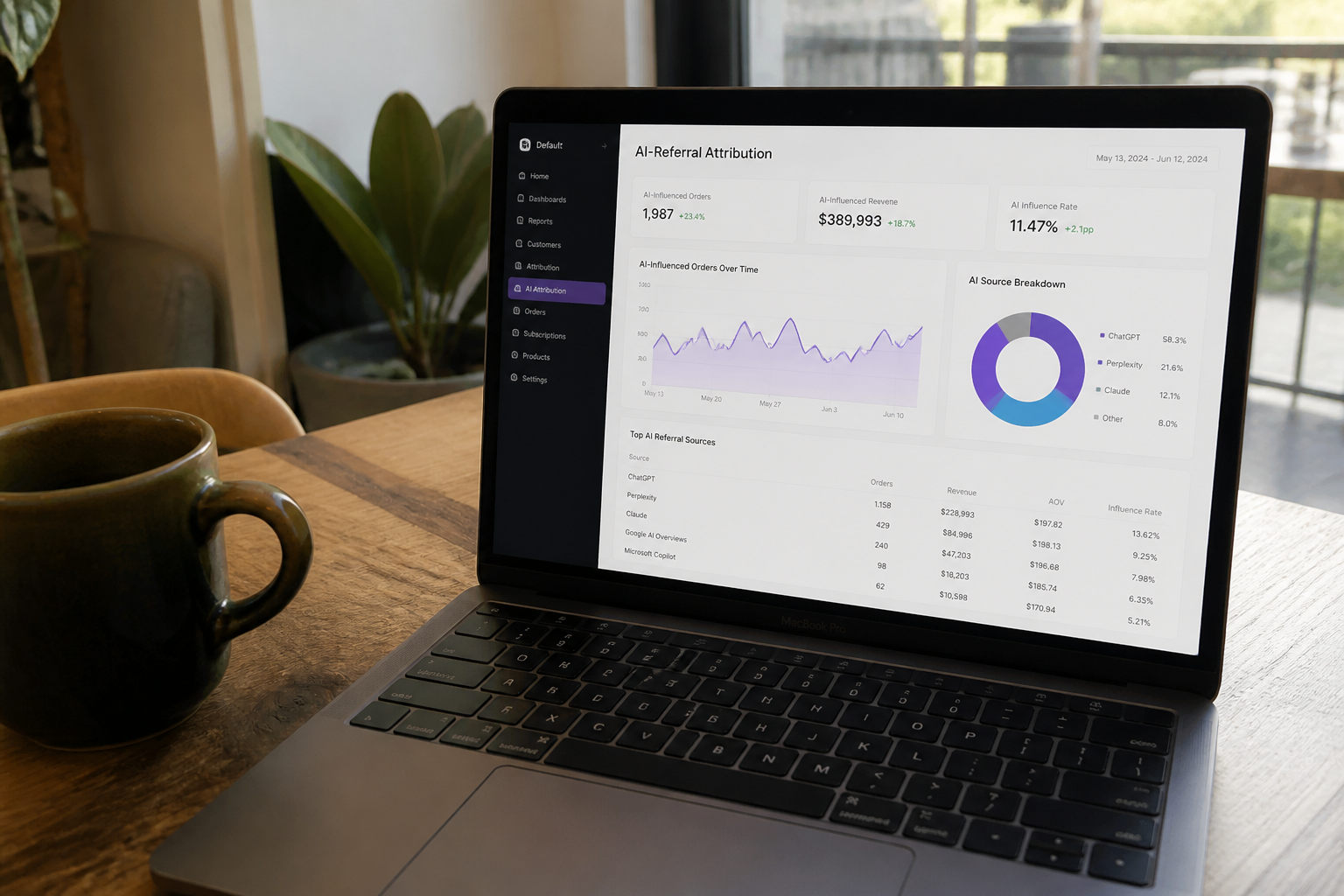
Backfilling means purposefully analyzing previous orders to retroactively assign AI referral status. This is about more than curiosity—it's a foundational step for accurate AI-referral attribution and smarter decision-making in a world of blended search and conversational commerce.
What Does “Backfilling” Look Like in Practice?
Imagine your Shopify store saw a spike in “direct” traffic last quarter. At the time, you chalked it up to returning customers or offline word-of-mouth. But now that AI assistants are being widely adopted and you’ve recently implemented an analytics plugin like OtoRank, you revisit those orders. By back-analyzing order logs, UTM parameters, and referrer data, you uncover a pattern: a notable share of sessions arrived immediately after visits from domains like bard.google.com or obscure short links—fingerprints of AI answer engines at work.
With backfilled data, you can retroactively re-categorize previously ambiguous orders under "AI Referrals." This doesn't just tidy up reporting; it reveals which products, content, and search queries are quietly powering your AI-driven growth, letting you prioritize optimization where it matters most.
How Merchants Backfill: A Step-by-Step Guide
- Export Historical Orders: Pull data from Shopify’s admin (or your analytics tool) for the timeframe you care about. Include source, medium, referrer, landing page, and UTM parameters per order.
- Identify AI Touchpoint Patterns: Look for referral domains and user agents that match known AI engines (e.g.,
gwsfor Google, orbing.com/assistantshits). - Cross-Reference with Timing and On-Site Events: AI-driven sessions often exhibit shorter landing-to-purchase windows or land directly on deep product URLs provided by the assistant, rather than the homepage. Flag these.
- Tag and Segment: In your reporting, create a segment for "Likely AI Referrals." OtoRank automates this but you can also maintain manual lists or custom analytics views as you cross-check evidence.
- Iterate and Validate: Cross-validate with any customer feedback (“I found you through ChatGPT...”) or sudden referrer patterns as new AI models are released.
What Can You Learn From Backfilled AI Referrals?
This practice is not just for vanity metrics. Some of the most actionable discoveries come from matching product or content performance to unexpected AI-originating orders. You might find:
- Product page language influences AI rankings: Orders from Bard or Bing might cluster on products with exceptionally clear, structured descriptions.
- Missed keywords or queries: Incoming AI traffic could center on phrases you’re not targeting in conventional SEO, but which AI assistants interpret from your content.
- Referrer patterns change as assistants evolve: Comparing attribution windows can reveal when new AI features launch (for example, a spike in orders after Google’s SGE expands to new geographies).
As discussed in AI Traffic vs. Organic Search: Reading the Analytics Dashboard, understanding these distinctions lets you optimize channel budgets, adjust merchandising, and advocate for the importance of AI-focused optimization to your team.
Why Backfilling Matters—And What's Next?
If you treat “direct” traffic and ambiguous orders as a black box, you’re leaving growth (and revenue) on the table. Backfilling historical orders for AI signatures lets you:
- Quantify the monetary impact of AI-driven discovery
- Pitch more credibly for investment in AEO (AI answer engine optimization)
- Refine attribution models—see Attribution Models for AI-Driven Ecommerce Traffic—to reflect how real customers shop in the new landscape
Most importantly, it nudges you from a backward-looking, SEO-centric view of attribution to a future-focused, AI-first strategy. And as AI shopping assistants get better at parsing product pages (and sometimes ignoring them entirely, as explored in How AI Shopping Assistants Read (and Ignore) Product Pages), proactively understanding their influence is no longer optional.
For Shopify merchants serious about not just keeping up but outpacing their competition in the era of conversational commerce, backfilling isn’t an academic exercise—it’s your best chance to surface uncredited wins and double down on what AI assistants are already recommending to your future customers.
Frequently asked questions
What does it mean to backfill historical orders for AI attribution?
Backfilling historical orders means analyzing past sales data to identify which purchases may have originated from AI shopping assistants, rather than traditional traffic sources, helping you accurately attribute those ‘invisible’ referrals.
How can I spot AI-driven orders in Shopify data?
You can look for unusual referrers, specific user agents, direct entrances to deep product URLs, or timing patterns that match known behaviors of AI assistants. Tools like OtoRank can automate much of this detection.
Why don’t traditional analytics platforms capture AI referrals accurately?
AI assistants often send traffic that appears as direct or uses obscure redirects, bypassing standard UTM and referral tracking methods, so dedicated analysis is needed to surface these hidden sources.
What’s the benefit of attributing AI referrals in my reports?
Accurately attributing AI referrals lets you optimize for emerging high-growth channels, allocate marketing spend efficiently, and better understand how customers are discovering your store in the age of conversational commerce.
Related reading
Check your own store's AEO score
No login, no email, just a score and what to fix first.