Guide
Spotting Bot Traffic vs. Genuine AI-Agent Referrals
Distinguishing between bot traffic and genuine AI-agent referrals is crucial for Shopify store owners. Learn concrete techniques to sharpen your AI-attribution accuracy.
Why Bot vs. AI-Agent Attribution Matters
As AI-powered assistants like ChatGPT and Google’s SGE increasingly influence where shoppers go, Shopify merchants face a new attribution problem: How do you accurately distinguish between basic "bot" traffic and genuine AI-referral traffic driven by answer engines? On the surface, both kinds of visits may look mysterious in analytics reports—lacking the classic sources, referrers, or UTM parameters of traditional web traffic. But there’s a world of difference when it comes to measuring the real business impact. Misreading automated bot crawlers as actual prospects not only inflates your traffic—but can also misguide marketing spend, conversion optimization, and your long-term AEO (answer engine optimization) strategy.
This is where a nuanced understanding of AI-referral attribution makes all the difference. Our AI-Referral Attribution hub dives into the broader implications, but here we’ll focus on the step-by-step tactics that help you tell the pretenders from the real digital influencers.
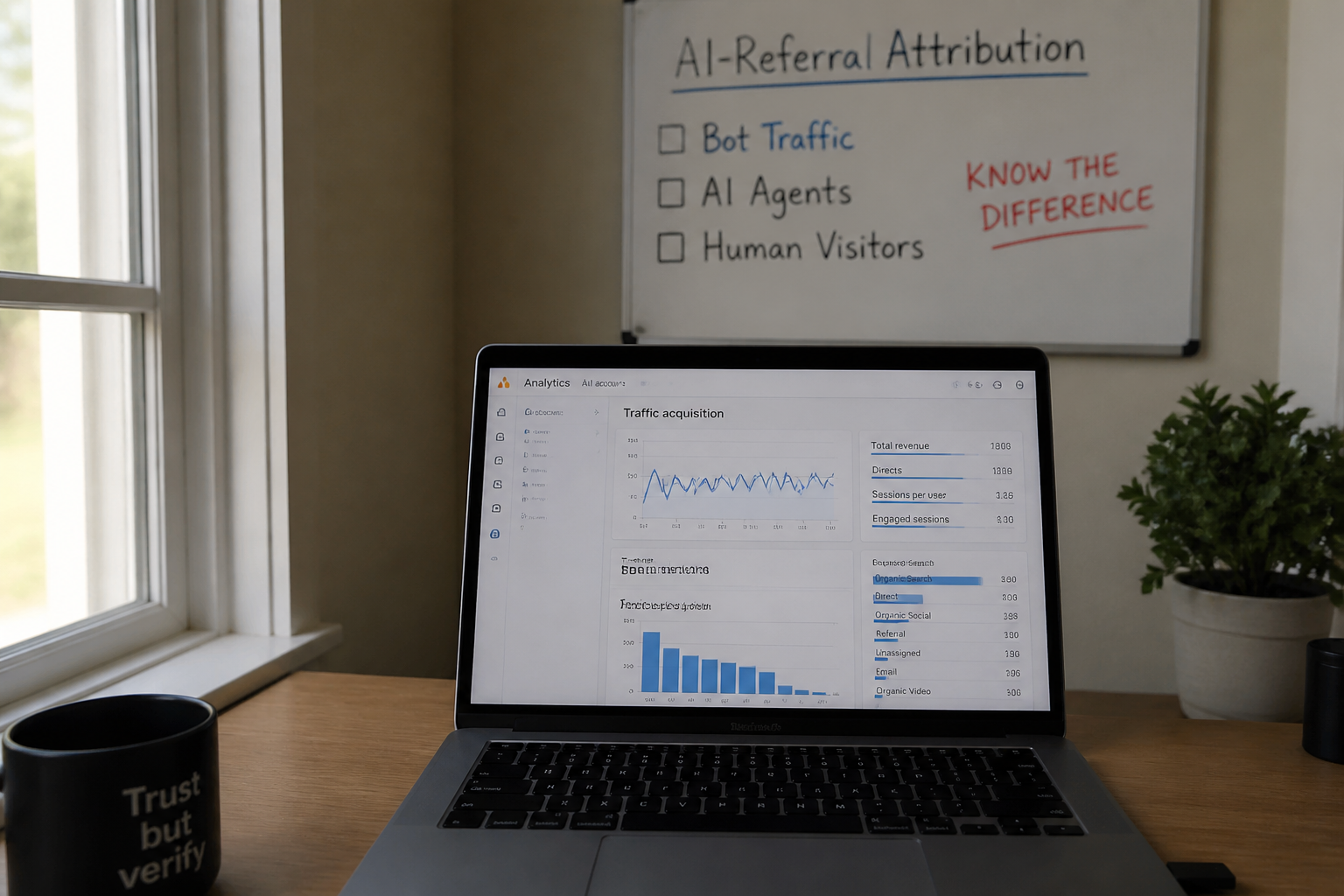
What is Bot Traffic—and Why Is it So Hard to Filter?
Bot traffic refers to automated scripts that crawl your Shopify store, usually for indexing, monitoring, or sometimes malicious activities. Examples include search engine crawlers (like Googlebot), price-scraping bots, uptime checkers, affiliate scanners, and more. In the past, filtering out bots was relatively straightforward: their user agents and access patterns (like hitting your pages with extreme frequency, or never executing JavaScript) stood out from normal users.
But as AI answer engines have evolved, the line has blurred. Today’s AI agents sometimes fetch your content looking like bots, yet their purpose is not mere crawling—they’re gathering information in real-time to answer actual user questions. For instance, an AI assistant might query your product page to summarize specs or recommend products, sending a curious new type of referral your way, often without traditional referrer headers.
The Anatomy of a Genuine AI-Agent Referral
Not all "bot-like" traffic is valueless. The key difference: A genuine AI-agent referral represents a real person asking a question and receiving an answer that points to your store. This is a new generation of high-intent referral, even if it might arrive with an unconventional fingerprint. What clues can you use?
- Timing and Session Context: Unlike bulk crawlers that hit hundreds of pages per second, AI-agent referrals often occur as one-off or session-paired requests, closely timed to real activity on assistant platforms.
- Origin Markers: Some AI providers (like Perplexity or Bing), add custom user agents or refer to specific APIs. Others, like SGE, are more opaque—but patterns emerge (for example, requests matching the launch of a new SGE feature in your market).
- Downstream Behavior: Bot traffic doesn’t interact—AI-referred visitors may engage, browse, or even purchase, albeit sometimes in less predictable ways than classic referrals.
- Referrer Leaks: Occasionally, platform quirks cause a partial referrer or unique header to appear, which can be correlated with spikes in AI-related questions for your niche.
Pinpointing these signals lets you tie AI-driven demand back to your store, rather than chalking it up as just another bot blip.
Practical Detection in Shopify Analytics
So how do you separate the wheat from the chaff in your data? Start by combining Shopify’s own reports with server-side monitoring, and look for:
- Analyzing user agents: Maintain a current list of known AI-assistant identifiers, updating as new players enter the market or change their protocols.
- Behavioral fingerprinting: Cross-reference site visits against session activity. Bots usually make multiple, rapid, non-interactive requests, while genuine AI-agent referrals typically load richer pages and sometimes simulate user actions (like scrolling or clicking a call-to-action).
- Conversion tail analysis: Track whether these visits result in further engagement or checkouts. While conversion rates may be lower (given that it’s often a “warm” vs. “hot” handoff), a measurable fraction will still outperform bot traffic, which converts at zero.
For a more granular approach, supplement Shopify’s dashboards with OtoRank’s specialized AEO tracking tools—these are designed to flag AI-origin sessions, letting you compare against historical bot baseline traffic. For a guide on which metrics to monitor, see our breakdown of meaningful AEO dashboards.
Case-in-Point: Structured Content Attracts AI but Confuses Bots
Here’s a practical example. A Shopify merchant structures their product content using FAQ schemas and clearly marked specifications. Within weeks, analytics show a moderate spike in unusual traffic, much of it coming from nonstandard user agents. At first glance, it looks like noise. But on closer inspection, many of these visits correlate with sessions that originate from search queries known to trigger AI-overview answers. Comparing to a merchant selling similar products with traditional, fluff-heavy pages, the latter gets the bots—but not the subsequent engagement. The difference? AI answer engines preferentially surface and reference structured, factual content. This not only attracts more genuine AI referrals, but the analytics pattern also becomes easier to distinguish from generic crawl activity. For a deep dive on optimizing your shop’s content for this shift, check out our in-depth article: Structured Content vs. Marketing Fluff: What AI Models Prefer.
Takeaways: How to Stay Ahead as Attribution Evolves
The rise of AI-driven shopping referrals is challenging last-click attribution models. If you’re relying solely on traditional analytics, you’re likely missing—and misattributing—the growing slice of high-value traffic coming through answer engines. This article on last-click attribution shortfalls unpacks why, and what to do next.
Ultimately, separating bot traffic from genuine AI-agent referrals is about context, pattern recognition, and correlating what’s happening in the broader AI ecosystem to what you’re seeing on your own storefront. As AI answer engines become major players in ecommerce discovery, developing this attribution literacy will be key to sustaining your visibility and competitive edge.
Frequently asked questions
Why can't I just filter by user agent to remove bot traffic?
Basic filtering by user agent misses subtle differences—some genuine AI-agent referrals use bot-like identifiers but represent real shoppers, not automated scrapers.
What makes an AI-agent referral valuable compared to ordinary bot visits?
An AI-agent referral is often initiated by a real shopper question on an AI platform, resulting in intent-driven visits and potential conversions, unlike generic bots.
Are there tools to specifically track AI-generated referrals on Shopify?
Yes, tools like OtoRank provide specialized tracking to differentiate AI-origin sessions from traditional bot or organic traffic, offering clearer attribution.
How does structured content affect AI-driven referrals versus bot traffic?
Structured content helps AI models understand and recommend your products, attracting genuine AI referrals, whereas bots may crawl both structured and unstructured pages indiscriminately.
Related reading
Check your own store's AEO score
No login, no email, just a score and what to fix first.