Guide
What to Look for in a Shopify AEO App Before You Install It
Before installing a Shopify AEO app, learn the concrete features that matter for real AI discovery: cross-channel indexing, granular data control, and transparent reporting.
Why Shopify Merchants Need AEO Apps (and Not Just SEO)
If you’re a Shopify merchant, you already know the basics of search engine optimization. But as shopping moves toward conversational AI — from Google’s Search Generative Experience to the rapidly evolving landscape of voice assistants and product-recommendation bots — increasing your visibility in AI-powered answers is the next frontier. That’s where Answer Engine Optimization (AEO) apps for Shopify come in. But not every “AEO-ready” app delivers equally, and knowing what to scrutinize before you click install can mean the difference between future-proofed growth and stagnant traffic.
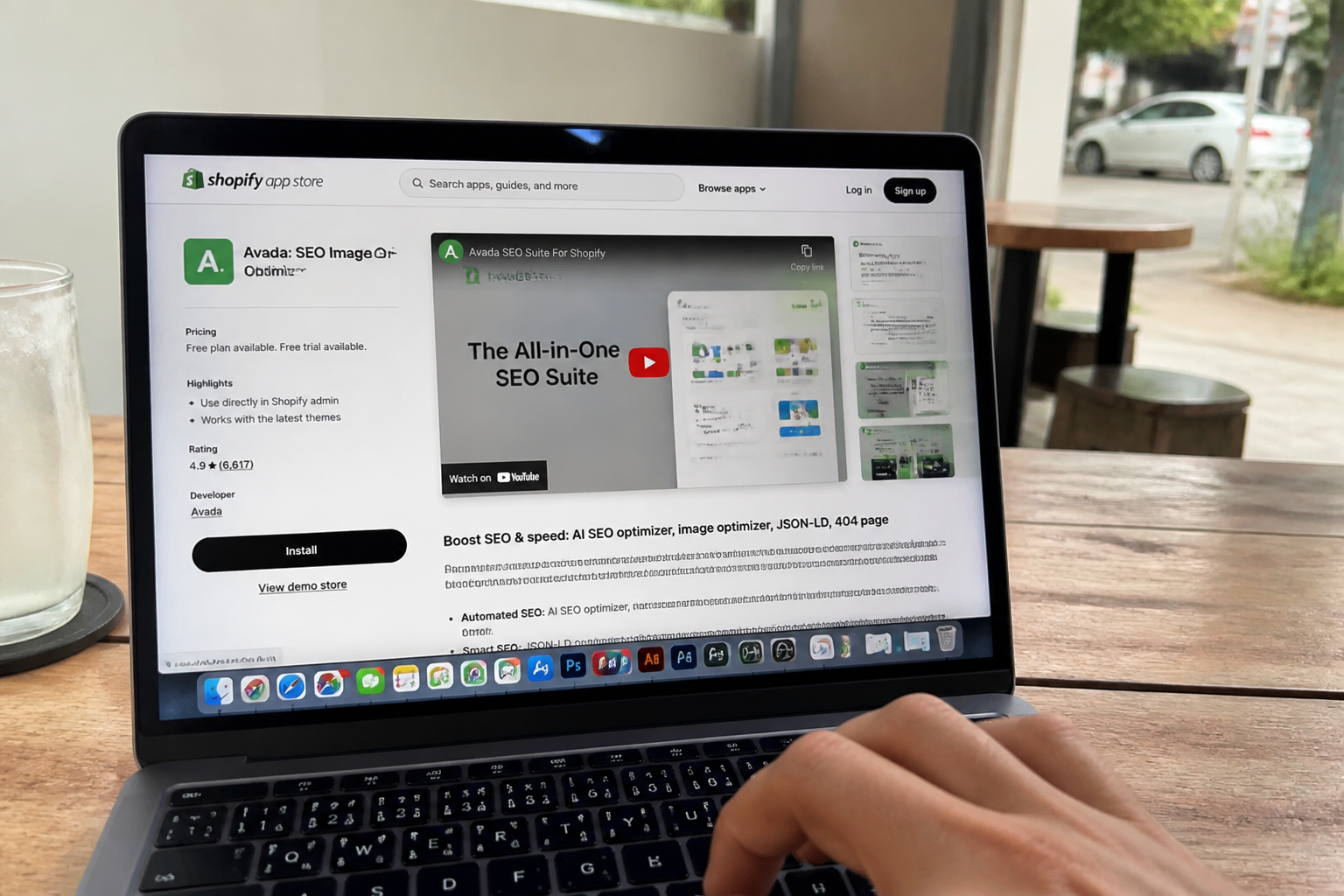
Before adding another app to your stack, it’s crucial to distinguish hype from actual results. The Shopify App Store is full of tools making broad claims about AI, but when it comes to real, actionable AEO for ecommerce, features and depth matter. Here’s a concrete guide on what to look for — with examples of why each trait matters in practice — so you confidently pick the right AEO app for your store.
1. True Multi-Channel AI Indexing Support
It’s easy for an app to say “AI optimized,” but a worthwhile AEO tool should be tuned for more than just Google’s answer engine. You want an app that actively monitors and adapts your store data for all of the growing pool of AI answer engines, including Bing Copilot, Perplexity, Google Gemini, and niche retail-specific bots. Ask the vendor (or check their documentation) — does their app output structured data that’s discoverable by major AI bots? Do they keep their optimizations up to date as answer engine requirements evolve?
Some apps narrowly focus on traditional SEO markup, or simply slap a static llms.txt file onto your site. That’s just the start. As outlined in Free llms.txt Generators vs. Paid AEO Platforms: What You Actually Get, only a full-featured platform goes beyond basic file generation to address how product, collection, and brand data are surfaced and protected across multiple channels.
2. Automated and Granular Data Controls
A strong Shopify AEO app should give you fine-tuned control over what information is accessible to AI crawlers — at the product, collection, and even attribute level. This means being able to block sensitive pages, surface new launches, and optimize specific content fields for answer engines (not just for Google, but for all major AI bots striving for rich, snippet-friendly results).
Granular controls are about more than privacy; they directly influence what gets shown to shoppers in conversational search. Tools that enable you to automatically synchronize changes from Shopify to your llms.txt or knowledge graph can prevent embarrassing information leaks or out-of-date product info being distributed via AI. Upgrading from a basic generator to a platform with this level of precision makes a meaningful impact on discoverability, as detailed in Migrating From a Basic llms.txt Generator to a Full AEO Platform.
3. Schema, Taxonomy, and Attribution Customization
AI answer engines thrive on structured, accurate, and context-rich data. Your AEO app shouldn’t just surface your products — it should help map them in a way that AI understands, using meaningful schema, category links, product types, and precise attributions. But buyer beware: not all apps allow you to customize or even preview the schema they publish for your collections and products.
Look for features like:
- Editable schema templates for products, articles, and pages
- Priority settings for attribute mapping (so you can elevate tags or certain vendors for AI attention)
- Reports on which schema elements are being indexed — not just submitted
The nuances around Shopify’s vendor, tags, and product type fields — explored in Vendor, Tags, and Product Type: Do They Affect AI Discovery? — are the difference between being buried in generic results or spotlighted as a relevant answer to AI-powered shoppers.
4. Transparent Reporting and Change Logs
Every merchant fears the black box: you install an app, click "optimize," and then… what actually happens? Leading AEO platforms for Shopify should lay bare their actions with audit trails and real-time reporting. You should see exactly which files, schemas, and fields were changed, with timestamps — and be alerted to issues like conflicting directives or failed crawls. This isn’t just CYA for your team, it lets you experiment and measure what drives more AI traffic, and quickly roll back changes if something goes sideways.
Bonus: Some advanced platforms also surface competitive insights, helping you benchmark your store’s AI answer engine visibility against peers. When evaluating AEO tools, look for sample dashboards and ask whether their reporting is exportable (huge for agencies managing client stores at scale).
5. Platform Reputation and Support (Not Hype)
Check those app reviews — but read between the lines. Fast, well-vetted support is non-negotiable, especially given how new AEO standards still are. See if the developer is regarded as a thought leader, regularly updates their knowledge base, or provides in-app education. For high-stakes optimizations, your provider should be transparent about what their features do and prompt with answers for your technical or strategy questions.
If all you see are shallow “great app!” reviews, dig deeper. Does the team demonstrate depth about AEO best practices in places like a Shopify App Store Positioning hub? Will they help you adapt to algorithm changes, or just leave you with a static install and call it a day?
Conclusion: Evaluate Beyond the Marketing Hype
AI-driven commerce is here, and the right Shopify AEO app is critical for making sure your store is not merely indexed, but chosen as the answer in the growing landscape of AI search engines. Seek out tools that deliver channel-wide optimizations, granular controls, transparent reporting, and meaningful schema mapping — not just buzzwords or minimal file generators. If your AEO strategy is built right, you’ll set the foundation for years of discoverability as answer engines become shoppers’ first stop.
Frequently asked questions
Is installing a basic llms.txt generator enough for AEO?
No—a basic llms.txt generator may provide only minimal optimization. Full AEO platforms allow granular control, schema mapping, and multi-channel support, delivering far greater visibility in AI-powered discovery.
Do Shopify product tags and vendor fields actually affect AI ranking?
Yes—fields like vendor, tags, and product type can influence how AI engines classify and rank your products. Well-structured metadata tailored for AEO increases your chances of being featured in answers, as discussed in our related posts.
What should I look for in AEO app reporting features?
Look for apps with clear, real-time reporting: you should see which elements are being indexed, what changes are made, and be able to export or analyze results. Transparency helps both troubleshooting and continuous optimization.
How do I make sure an AEO app keeps up with evolving AI engine standards?
Choose apps from teams actively updating their feature set and documentation. Check whether they provide regular updates, educational content, and have a reputation for responsive support regarding new AI search protocols.
Related reading
Check your own store's AEO score
No login, no email, just a score and what to fix first.