Guide
Your First AI-Referred Order: What It Means and What to Do Next
Landing your first AI-referred order is a sign your Shopify store is answer engine-ready. Here’s what that milestone really means—and how to turn it into a repeatable growth strategy.
Unpacking Your First AI-Referred Order
Picture this: you open your analytics dashboard and notice an order tagged "AI-referred" — but what does that actually mean for your Shopify store, and how should you react? As artificial intelligence continues to reshape how customers discover and shop online, the lines between search, social, and direct channels are blurring. When your hard work finally results in an order from an AI answer engine, it’s a major milestone, but one that comes with important implications and next steps.
AI-referred orders originate from answer engines like Google SGE, Bing Copilot, Perplexity, or ChatGPT's browsing-enabled responses. Instead of clicking a traditional blue link, a customer asks a question, receives a direct product recommendation from an AI—often with a link, sometimes with a call to action like "buy now"—and follows it straight to your store. These referrals represent the next frontier of search, where structured product data, content relevance, and site authority coalesce into instant, trusted answers.
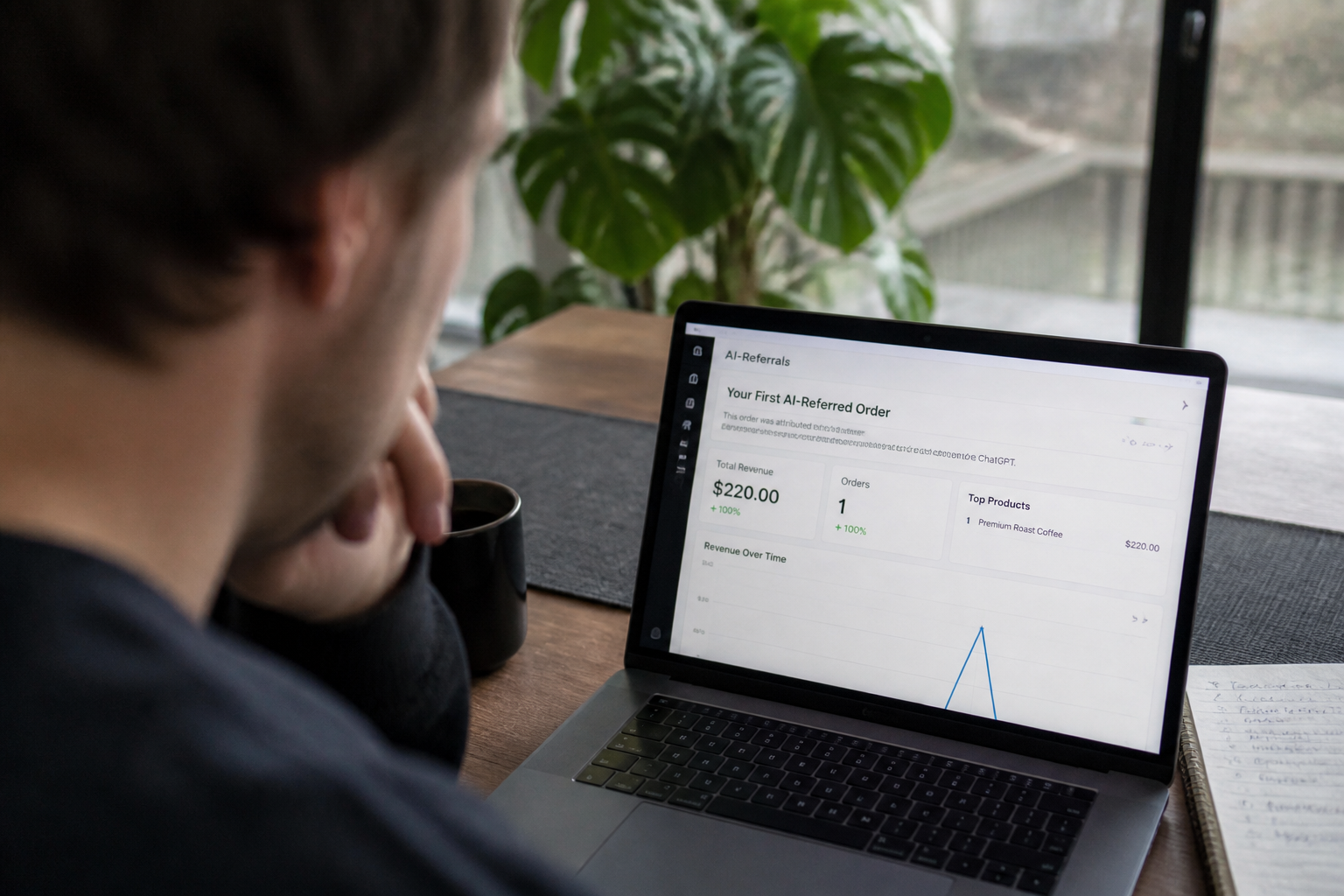
The journey doesn’t end with a single order. Decoding and acting on these events will help you harness AI referrers as a scalable channel, not just as a novelty in your analytics. Here’s what an AI-referred order means, why it matters for modern Shopify merchants, and how you can turn that first sign of traction into a repeatable growth lever.
What Exactly Is an AI-Referred Order?
Let’s get specific: an AI-referred order is a transaction where the initiating referral source is an AI system that answered a user’s product query, leading them directly to your website. In practical terms, this might be a Perplexity response linking to your flagship product after a buyer asks, “What’s the best vegan leather backpack for travel?” Or it could be SGE or Bing Copilot suggesting your Shopify store in its dynamic answer card.
These visits often show up in attribution as ambiguous sources like perplexity.ai, bard.google.com, or simply as direct traffic—unless you’ve set up attribution tracking, such as a web pixel, specifically for AI referrers. If you haven’t done this yet, our post on setting up a web pixel to capture AI referral traffic is a must-read.
Unlike organic search or paid ads, AI-referral sits at the crossroads of search and recommendation. A single order means your product and content were selected by the AI as particularly relevant and trustworthy for a given query—offering a glimpse into both your content’s quality and your future potential.
Why AI Referral Matters
Getting your first AI-referred order is far more than a curiosity. Here’s why it’s a game changer:
- AI answer engines are rapidly gaining user adoption. As more shopping journeys begin with AI, being recommended by these engines becomes as crucial as SEO once was for Google SERPs.
- AI referrals signal high content and product fit. The algorithms surface content that is not only structured for machine readability, but contextually addresses questions better than the competition.
- They’re a harbinger of future traffic patterns. Early adopters who establish AI-referral pipelines now will enjoy compounding advantages, similar to the early days of organic search.
As detailed in our AI-Referral Attribution hub, properly attributing and analyzing these orders is essential for gaining visibility into which queries—and which AI engines—are driving results for your store.
What to Do Immediately After Seeing Your First AI-Referred Order
Celebrating is encouraged—but don’t stop there. Now is the time to double down on this emerging channel:
- Verify your tracking. Confirm that AI traffic is properly tagged and recorded. This is critical for ongoing measurement. Dive into AI Traffic vs. Organic Search: Reading the Analytics Dashboard for practical guidance.
- Analyze the referral context. Use UTM parameters, referrer URLs, or analytics event logs to pinpoint which product, page, or content type was surfaced. Did the AI draw from your blog, a product description, or a collection page? (Tip: Some AI bots send traffic as "direct," so dig into session details.)
- Check your content’s AI readiness. An AI surfaced your page, but is your whole store up to par? Review structured data, clarity of product information, and question-focused content. Our take on the difference between structured data and AI-ready content can help you spot weak points.
- Identify repeatable opportunities. If your answer for “best vegan backpack” got traction, are there other adjacent queries you can target? Optimize and build out content to address these questions proactively.
- Monitor for patterns. Track whether AI-referral orders become more frequent and try to identify seasonality, product-related triggers, or answer engine changes affecting your exposure.
Beyond a Single Order: Building AI-Referral into Your Growth Strategy
The brands that win in the age of answer engines treat these early AI-referred conversions as the starting line, not the finish. Here’s how to leverage your initial success:
- Iterate on content with real queries in mind. Use language from actual AI-referred queries to rewrite and expand product descriptions, FAQs, and collection pages. The closer you match buyer intent, the more likely AI engines will showcase your store.
- Invest in AEO (Answer Engine Optimization). That means going beyond schema markup—focus on surfacing precise product details, availability, shipping policies, and unique selling points that AI engines crave for authoritative answers.
- Advocate for proper AI referral attribution across your tech stack. Many Shopify themes and apps don’t natively separate AI traffic, so customize your analytics stack early to prevent losing attribution as this channel grows.
- Educate your team about AI-driven journeys. When support, product, and marketing teams understand why and how buyers find you via AI, everyone can collaborate on improvements that turn first-time orders into loyal customers.
By systemizing your approach from the very first AI-referred order, you position your store to thrive as shopping and search increasingly become AI-powered experiences.
Key Takeaways
- Your first AI-referred order is a signal you’ve achieved answer engine visibility—a competitive advantage in today’s ecommerce landscape.
- Act quickly to audit tracking, analyze referral context, and reinforce what worked.
- Iterate on content and tech stack now, before AI referrals become a major traffic driver for your niche.
- Use every order as a case study: what question did the AI solve, and how can you offer the best answer next time?
Frequently asked questions
How can I tell if an order came from an AI answer engine?
Orders from AI engines usually have unique referrers in your analytics, such as perplexity.ai or bard.google.com. For better tracking, set up a dedicated analytics web pixel as outlined in our post on setting up a web pixel to capture AI referral traffic.
Why does getting an AI-referred order matter for my Shopify store?
AI-referred orders indicate your products and content are being recommended by new answer engines, reflecting strong contextual relevance and providing a foothold in emerging search channels that will shape future customer journeys.
What should I do after my first AI-referred order?
Verify your attribution tracking, analyze which content was referenced, review your store’s AI readiness, and expand on successful topics to encourage more referrals from AI engines.
How is AI referral traffic different from organic search?
AI referral traffic comes from engines providing direct answers and recommendations, often bypassing traditional search results and reflecting a higher level of trust and specificity in response to buyer questions.
Related reading
Check your own store's AEO score
No login, no email, just a score and what to fix first.